SOLDES
Jusqu'à -70% sur une sélection d'articles*

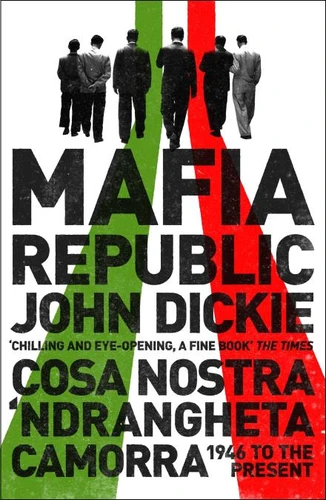
Mafia Republic. Italy's Criminal Curse. Cosa Nostra, 'Ndrangheta and Camorra from 1946 to the Present
Par :Formats :
Disponible dans votre compte client Decitre ou Furet du Nord dès validation de votre commande. Le format ePub protégé est :
- Compatible avec une lecture sur My Vivlio (smartphone, tablette, ordinateur)
- Compatible avec une lecture sur liseuses Vivlio
- Pour les liseuses autres que Vivlio, vous devez utiliser le logiciel Adobe Digital Edition. Non compatible avec la lecture sur les liseuses Kindle, Remarkable et Sony
- Non compatible avec un achat hors France métropolitaine
 , qui est-ce ?
Notre partenaire de plateforme de lecture numérique où vous retrouverez l'ensemble de vos ebooks gratuitement
Pour en savoir plus sur nos ebooks, consultez notre aide en ligne ici
C'est si simple ! Lisez votre ebook avec l'app Vivlio sur votre tablette, mobile ou ordinateur :

- Nombre de pages400
- FormatePub
- ISBN978-1-4447-2643-5
- EAN9781444726435
- Date de parution08/05/2013
- Protection num.Adobe DRM
- Infos supplémentairesepub
- ÉditeurSceptre
Résumé
In MAFIA REPUBLIC, John Dickie, Professor of Italian Studies at University College, London and author of the international bestsellers COSA NOSTRA and MAFIA BROTHERHOODS, shows how the Italian mafias have grown in power and become more and more interconnected, with terrifying consequences. In 1946, Italy became a democratic Republic, thereby entering the family of modern western nations. But deep within Italy there lurked a forgotten curse: three major criminal brotherhoods, whose methods had been honed over a century of experience.
As Italy grew, so did the mafias. Sicily's Cosa Nostra, the camorra from Naples, and the mysterious 'ndrangheta from Calabria stood ready to enter the wealthiest and bloodiest period of their long history. Italy made itself rich by making scooters, cars and handbags. The mafias carved out their own route to wealth through tobacco smuggling, construction, kidnapping and narcotics. And as criminal business grew exponentially, the mafias grew not just more powerful, but became more interconnected.
By the 1980s, Southern Italy was on the edge of becoming a narco-state. The scene was set for a titanic confrontation between heroic representatives of the law, and mafiosi who could no longer tolerate any obstacle to their ambitions. This was a war for Italy's future as a civilized country. At its peak in 1992-93, the 'ndrangheta was beheading people in the street, and the Sicilian mafia murdered its greatest enemies, investigating magistrates Giovanni Falcone and Paolo Borsellino, before embarking on a major terrorist bombing campaign on the Italian mainland.
Today, the long shadow of mafia history still hangs over a nation wracked by debt, political paralysis, and widespread corruption. While police put their lives on the line every day, one of Silvio Berlusconi's ministers said that Italy had to 'learn to live with the mafia'; suspicions of mafia involvement still surround some of the country's most powerful media moguls and politicians. The latest investigations show that its reach is astonishing: it controls much of Europe's wholesale cocaine trade, and representatives from as far away as Germany, Canada and Australia come to Calabria to seek authorisation for their affairs.
Just when it thought it had finally contained the mafia threat, Italy is now discovering that it harbours the most global criminal network of them all.
As Italy grew, so did the mafias. Sicily's Cosa Nostra, the camorra from Naples, and the mysterious 'ndrangheta from Calabria stood ready to enter the wealthiest and bloodiest period of their long history. Italy made itself rich by making scooters, cars and handbags. The mafias carved out their own route to wealth through tobacco smuggling, construction, kidnapping and narcotics. And as criminal business grew exponentially, the mafias grew not just more powerful, but became more interconnected.
By the 1980s, Southern Italy was on the edge of becoming a narco-state. The scene was set for a titanic confrontation between heroic representatives of the law, and mafiosi who could no longer tolerate any obstacle to their ambitions. This was a war for Italy's future as a civilized country. At its peak in 1992-93, the 'ndrangheta was beheading people in the street, and the Sicilian mafia murdered its greatest enemies, investigating magistrates Giovanni Falcone and Paolo Borsellino, before embarking on a major terrorist bombing campaign on the Italian mainland.
Today, the long shadow of mafia history still hangs over a nation wracked by debt, political paralysis, and widespread corruption. While police put their lives on the line every day, one of Silvio Berlusconi's ministers said that Italy had to 'learn to live with the mafia'; suspicions of mafia involvement still surround some of the country's most powerful media moguls and politicians. The latest investigations show that its reach is astonishing: it controls much of Europe's wholesale cocaine trade, and representatives from as far away as Germany, Canada and Australia come to Calabria to seek authorisation for their affairs.
Just when it thought it had finally contained the mafia threat, Italy is now discovering that it harbours the most global criminal network of them all.