
John S. C. Abbott (1805-1877) was a prolific American historian, educator, and Congregational pastor. He is best remembered for his vividly accessible, morally grounded biographies, notably his highly sympathetic History of Napoleon Bonaparte, and for writing foundational 19th-century domestic and parenting guides.
Nouveauté
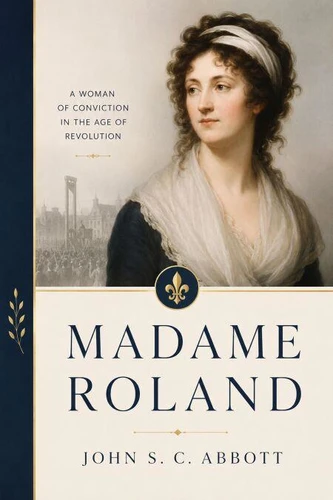
Madame Roland
Par :Formats :
Disponible dans votre compte client Decitre ou Furet du Nord dès validation de votre commande. Le format ePub est :
- Compatible avec une lecture sur My Vivlio (smartphone, tablette, ordinateur)
- Compatible avec une lecture sur liseuses Vivlio
- Pour les liseuses autres que Vivlio, vous devez utiliser le logiciel Adobe Digital Edition. Non compatible avec la lecture sur les liseuses Kindle, Remarkable et Sony
 , qui est-ce ?
Notre partenaire de plateforme de lecture numérique où vous retrouverez l'ensemble de vos ebooks gratuitement
Pour en savoir plus sur nos ebooks, consultez notre aide en ligne ici
C'est si simple ! Lisez votre ebook avec l'app Vivlio sur votre tablette, mobile ou ordinateur :

- Nombre de pages227
- FormatePub
- ISBN978-3-565-50617-0
- EAN9783565506170
- Date de parution04/08/2026
- Protection num.Digital Watermarking
- Taille715 Ko
- Infos supplémentairesepub
- ÉditeurEmphaloz Publishing House
Résumé
The book delves into the life of Madame Roland, a significant figure during the French Revolution, exploring her formative years, intellectual development, and her role amidst the tumultuous events of her time. It reflects on her ambitions, the challenges she faced, and the profound influence she had as a woman engaged in political and social reform. The opening of the narrative introduces us to Jane Maria Phlippon, later known as Madame Roland, by tracing her childhood and the contrasting influences of her parents.
Her father, Gratien Phlippon, embodies the restless spirit of the working class dissatisfied with societal inequalities, while her mother epitomizes a more submissive, pious nature. As Jane grows up, her thirst for knowledge and intellectual pursuits burgeons, leading her to a convent. The chapter outlines her formative experiences, including her early love for literature and her profound reflections on the disparities present in society.
This early life foreshadows her later achievements and her pivotal role in one of history's most significant revolutions.
Her father, Gratien Phlippon, embodies the restless spirit of the working class dissatisfied with societal inequalities, while her mother epitomizes a more submissive, pious nature. As Jane grows up, her thirst for knowledge and intellectual pursuits burgeons, leading her to a convent. The chapter outlines her formative experiences, including her early love for literature and her profound reflections on the disparities present in society.
This early life foreshadows her later achievements and her pivotal role in one of history's most significant revolutions.
A propos de John S. C. Abbott


0,99 €
Madame Roland
E-book
0,99 €
Maria Antoinette
E-book
0,99 €

Louis XIV
E-book
0,99 €

Louis Philippe
E-book
0,99 €
Josephine
E-book
0,99 €
King Philip
E-book
0,99 €
Hortense
E-book
0,99 €
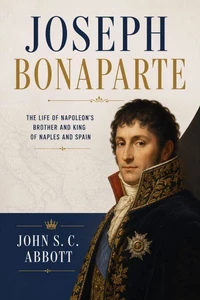
Joseph Bonaparte
E-book
0,99 €