SOLDES
Jusqu'à -70% sur une sélection d'articles*

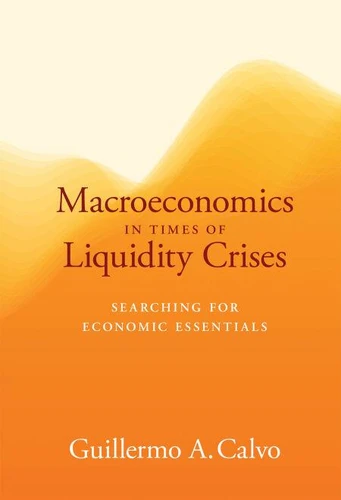
Macroeconomics in Times of Liquidity Crises. Searching for Economic Essentials
Par :Formats :
Disponible dans votre compte client Decitre ou Furet du Nord dès validation de votre commande. Le format ePub protégé est :
- Compatible avec une lecture sur My Vivlio (smartphone, tablette, ordinateur)
- Compatible avec une lecture sur liseuses Vivlio
- Pour les liseuses autres que Vivlio, vous devez utiliser le logiciel Adobe Digital Edition. Non compatible avec la lecture sur les liseuses Kindle, Remarkable et Sony
- Non compatible avec un achat hors France métropolitaine
 , qui est-ce ?
Notre partenaire de plateforme de lecture numérique où vous retrouverez l'ensemble de vos ebooks gratuitement
Pour en savoir plus sur nos ebooks, consultez notre aide en ligne ici
C'est si simple ! Lisez votre ebook avec l'app Vivlio sur votre tablette, mobile ou ordinateur :

- Nombre de pages264
- FormatePub
- ISBN978-0-262-33602-4
- EAN9780262336024
- Date de parution28/10/2016
- Protection num.Adobe DRM
- Taille4 Mo
- Infos supplémentairesepub
- ÉditeurThe MIT Press
Résumé
An examination of Liquidity Crunch in triggering and characterizing financial crises. Since the subprime mortgage crisis that began in 2007, advanced economies have felt a nagging sense of insecurity. In parallel, the profession has witnessed phenomena that are alien to mainstream macroeconomic models. Financial crises are systemic, occurring simultaneously in different economies. In this book, Guillermo Calvo focuses on liquidity factors as a commonality in financial crises.
Specifically, he examines the role of "liquidity crunch" in triggering crises. He also identifies a fundamental (but overlooked) idea in Keynes's General Theory, termed by Calvo the price theory of money, to rationalize the resiliency of the U. S. dollar when other dollar-backed assets suffered a devastating liquidity crunch. Calvo shows that a sharp focus on liquidity reveals some characteristics of liquid assets that are easy to miss otherwise.
He argues for liquidity's centrality, presenting what he calls the Liquidity Approach. He shows that simple extensions of standard monetary models help rationalize the implications of the liquidity crunch, and then examines slightly more technical models that highlight liquidity issues. He explores the empirical effects of liquidity crunch by studying systemic sudden stops (of capital inflows), presuming that they are triggered by liquidity crunch-type phenomena.
Specifically, he examines the role of "liquidity crunch" in triggering crises. He also identifies a fundamental (but overlooked) idea in Keynes's General Theory, termed by Calvo the price theory of money, to rationalize the resiliency of the U. S. dollar when other dollar-backed assets suffered a devastating liquidity crunch. Calvo shows that a sharp focus on liquidity reveals some characteristics of liquid assets that are easy to miss otherwise.
He argues for liquidity's centrality, presenting what he calls the Liquidity Approach. He shows that simple extensions of standard monetary models help rationalize the implications of the liquidity crunch, and then examines slightly more technical models that highlight liquidity issues. He explores the empirical effects of liquidity crunch by studying systemic sudden stops (of capital inflows), presuming that they are triggered by liquidity crunch-type phenomena.