SOLDES
Jusqu'à -70% sur une sélection d'articles*

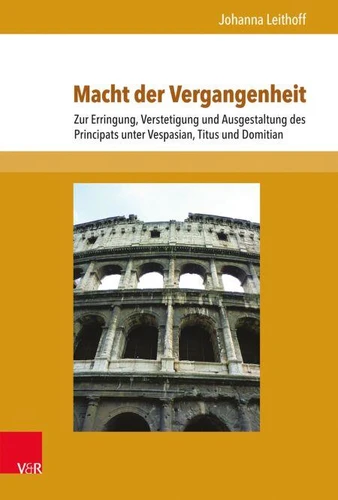
Macht der Vergangenheit. Zur Erringung, Verstetigung und Ausgestaltung des Principats unter Vespasian, Titus und Domitian
Par :Formats :
Disponible dans votre compte client Decitre ou Furet du Nord dès validation de votre commande. Le format PDF est :
- Compatible avec une lecture sur My Vivlio (smartphone, tablette, ordinateur)
- Compatible avec une lecture sur liseuses Vivlio
- Pour les liseuses autres que Vivlio, vous devez utiliser le logiciel Adobe Digital Edition. Non compatible avec la lecture sur les liseuses Kindle, Remarkable et Sony
 , qui est-ce ?
Notre partenaire de plateforme de lecture numérique où vous retrouverez l'ensemble de vos ebooks gratuitement
Pour en savoir plus sur nos ebooks, consultez notre aide en ligne ici
C'est si simple ! Lisez votre ebook avec l'app Vivlio sur votre tablette, mobile ou ordinateur :

- Nombre de pages266
- FormatPDF
- ISBN978-3-8470-0289-5
- EAN9783847002895
- Date de parution10/12/2014
- Protection num.pas de protection
- Taille3 Mo
- Infos supplémentairespdf
- ÉditeurV&R Unipress
Résumé
After Nero's death and the following civil wars in 68-69 A. D., it was the victor Vespasian, who re-established stability and continuity. What set him apart from his Julio-Claudian predecessors was his origin from a municipal family and his status as a normal member of the senatorial order until his revolt. In this context the legitimisation and presentation of his new position of power was vital for him.
The question therefore is how Vespasian and his sons, who succeeded him and came to power under very different circumstances, used the past for their own purposes. This study concentrates on these references to the past with a view to three main aspects: gaining power, which meant dealing with the pretenders of the civil wars on the one and presenting the victory over the Jewish Rebels on the other hand; consolidating the principate, which focuses on the relation between senators and the princeps and the impact of this process on the creation of the 'republican' idea; last, shaping the principate, which concentrates on the role-model-character of the Julio-Claudian principes for Vespasian, Titus, and Domitian.
The question therefore is how Vespasian and his sons, who succeeded him and came to power under very different circumstances, used the past for their own purposes. This study concentrates on these references to the past with a view to three main aspects: gaining power, which meant dealing with the pretenders of the civil wars on the one and presenting the victory over the Jewish Rebels on the other hand; consolidating the principate, which focuses on the relation between senators and the princeps and the impact of this process on the creation of the 'republican' idea; last, shaping the principate, which concentrates on the role-model-character of the Julio-Claudian principes for Vespasian, Titus, and Domitian.