
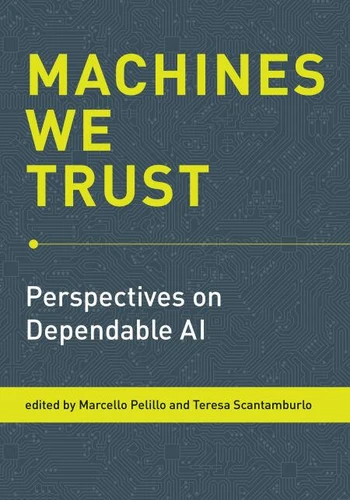
Machines We Trust. Perspectives on Dependable AI
Par : ,Formats :
Disponible dans votre compte client Decitre ou Furet du Nord dès validation de votre commande. Le format ePub protégé est :
- Compatible avec une lecture sur My Vivlio (smartphone, tablette, ordinateur)
- Compatible avec une lecture sur liseuses Vivlio
- Pour les liseuses autres que Vivlio, vous devez utiliser le logiciel Adobe Digital Edition. Non compatible avec la lecture sur les liseuses Kindle, Remarkable et Sony
- Non compatible avec un achat hors France métropolitaine
 , qui est-ce ?
Notre partenaire de plateforme de lecture numérique où vous retrouverez l'ensemble de vos ebooks gratuitement
Pour en savoir plus sur nos ebooks, consultez notre aide en ligne ici
C'est si simple ! Lisez votre ebook avec l'app Vivlio sur votre tablette, mobile ou ordinateur :

- Nombre de pages174
- FormatePub
- ISBN978-0-262-36216-0
- EAN9780262362160
- Date de parution24/08/2021
- Protection num.Adobe DRM
- Taille2 Mo
- Infos supplémentairesepub
- ÉditeurThe MIT Press
Résumé
Experts from disciplines that range from computer science to philosophy consider the challenges of building AI systems that humans can trust. Artificial intelligence-based algorithms now marshal an astonishing range of our daily activities, from driving a car ("turn left in 400 yards") to making a purchase ("products recommended for you"). How can we design AI technologies that humans can trust, especially in such areas of application as law enforcement and the recruitment and hiring process? In this volume, experts from a range of disciplines discuss the ethical and social implications of the proliferation of AI systems, considering bias, transparency, and other issues.
The contributors, offering perspectives from computer science, engineering, law, and philosophy, first lay out the terms of the discussion, considering the "ethical debts" of AI systems, the evolution of the AI field, and the problems of trust and trustworthiness in the context of AI. They go on to discuss specific ethical issues and present case studies of such applications as medicine and robotics, inviting us to shift the focus from the perspective of a "human-centered AI" to that of an "AI-decentered humanity." Finally, they consider the future of AI, arguing that, as we move toward a hybrid society of cohabiting humans and machines, AI technologies can become humanity's allies.
The contributors, offering perspectives from computer science, engineering, law, and philosophy, first lay out the terms of the discussion, considering the "ethical debts" of AI systems, the evolution of the AI field, and the problems of trust and trustworthiness in the context of AI. They go on to discuss specific ethical issues and present case studies of such applications as medicine and robotics, inviting us to shift the focus from the perspective of a "human-centered AI" to that of an "AI-decentered humanity." Finally, they consider the future of AI, arguing that, as we move toward a hybrid society of cohabiting humans and machines, AI technologies can become humanity's allies.