
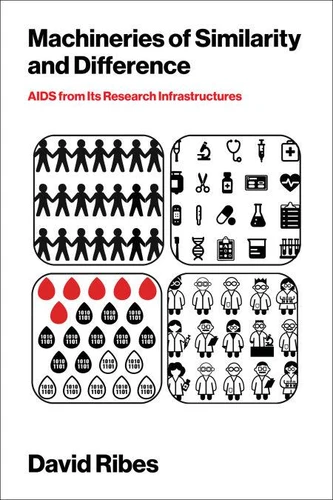
Machineries of Similarity and Difference. AIDS from Its Research Infrastructures
Par :Formats :
Disponible dans votre compte client Decitre ou Furet du Nord dès validation de votre commande. Le format ePub protégé est :
- Compatible avec une lecture sur My Vivlio (smartphone, tablette, ordinateur)
- Compatible avec une lecture sur liseuses Vivlio
- Pour les liseuses autres que Vivlio, vous devez utiliser le logiciel Adobe Digital Edition. Non compatible avec la lecture sur les liseuses Kindle, Remarkable et Sony
- Non compatible avec un achat hors France métropolitaine
 , qui est-ce ?
Notre partenaire de plateforme de lecture numérique où vous retrouverez l'ensemble de vos ebooks gratuitement
Pour en savoir plus sur nos ebooks, consultez notre aide en ligne ici
C'est si simple ! Lisez votre ebook avec l'app Vivlio sur votre tablette, mobile ou ordinateur :

- Nombre de pages338
- FormatePub
- ISBN978-0-262-38508-4
- EAN9780262385084
- Date de parution21/04/2026
- Protection num.Adobe DRM
- Taille10 Mo
- Infos supplémentairesepub
- ÉditeurThe MIT Press
Résumé
An examination of three research infrastructures over three decades as they sought to support studies of HIV/AIDS across dramatic changes to the disease, the science, and its politics. In Machineries of Similarity and Difference, David Ribes theorizes interoperability, or how to make different things work together. For the last 30 years, standardization has been the dominant social scientific motif for understanding coordination and collaboration across time and space.
But across those years much has changed, in part through computational and other technical advances, in part through a new orientation to the value of similarity and difference. Interoperation is an ascendent social form. To examine the production of equivalency, the author offers a book-length extended case study of three keystone research infrastructures that have been supporting investigations of AIDS for over 35 years-nearly since the beginning of the US epidemic, even before we knew of HIV.
The book is thus an examination of historical epistemology and ontology with respect to research infrastructure, attending to the technical conflicts and social politics that play out within and across scientific arenas and social worlds.
But across those years much has changed, in part through computational and other technical advances, in part through a new orientation to the value of similarity and difference. Interoperation is an ascendent social form. To examine the production of equivalency, the author offers a book-length extended case study of three keystone research infrastructures that have been supporting investigations of AIDS for over 35 years-nearly since the beginning of the US epidemic, even before we knew of HIV.
The book is thus an examination of historical epistemology and ontology with respect to research infrastructure, attending to the technical conflicts and social politics that play out within and across scientific arenas and social worlds.