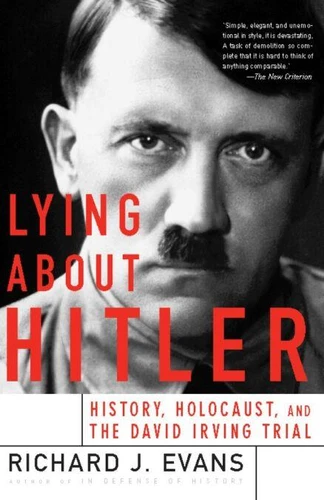
A fascinating examination of a controversial case centering around holocaust denial, from a specialist in German history. In ruling against historian David Irving in his libel suit against the American historian Deborah Lipstadt, the High Court in London labeled him a falsifier of history. No objective historian, declared the judge, would manipulate the documentary record in the way that Irving did.
Richard J. Evans, a Cambridge historian and the chief advisor for the defense, uses this pivotal trial as a lens for exploring a range of difficult questions about the nature of the historian's enterprise. For instance, don't all historians in the end bring a subjective agenda to bear on their reading of the evidence? Is it possible that Irving lost his case not because of his biased history but because his agenda was unacceptable? The central issue in the trial-as for Evans in this book-was not the past itself, but the way in which historians study the past.
In a series of short, sharp chapters, Richard Evans sets David Irving's methods alongside the historical record in order to illuminate the difference between responsible and irresponsible history. The result is a cogent and deeply informed study in the nature of historical interpretation.
A fascinating examination of a controversial case centering around holocaust denial, from a specialist in German history. In ruling against historian David Irving in his libel suit against the American historian Deborah Lipstadt, the High Court in London labeled him a falsifier of history. No objective historian, declared the judge, would manipulate the documentary record in the way that Irving did.
Richard J. Evans, a Cambridge historian and the chief advisor for the defense, uses this pivotal trial as a lens for exploring a range of difficult questions about the nature of the historian's enterprise. For instance, don't all historians in the end bring a subjective agenda to bear on their reading of the evidence? Is it possible that Irving lost his case not because of his biased history but because his agenda was unacceptable? The central issue in the trial-as for Evans in this book-was not the past itself, but the way in which historians study the past.
In a series of short, sharp chapters, Richard Evans sets David Irving's methods alongside the historical record in order to illuminate the difference between responsible and irresponsible history. The result is a cogent and deeply informed study in the nature of historical interpretation.

 , qui est-ce ?