SOLDES
Jusqu'à -70% sur une sélection d'articles*

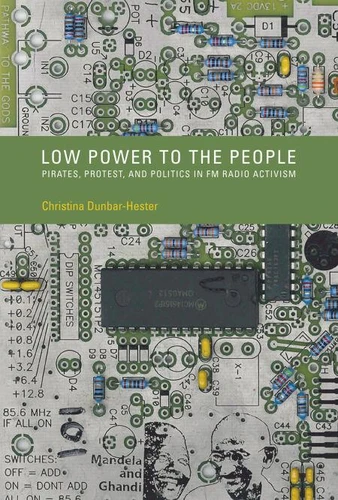
Low Power to the People. Pirates, Protest, and Politics in FM Radio Activism
Par :Formats :
Disponible dans votre compte client Decitre ou Furet du Nord dès validation de votre commande. Le format ePub protégé est :
- Compatible avec une lecture sur My Vivlio (smartphone, tablette, ordinateur)
- Compatible avec une lecture sur liseuses Vivlio
- Pour les liseuses autres que Vivlio, vous devez utiliser le logiciel Adobe Digital Edition. Non compatible avec la lecture sur les liseuses Kindle, Remarkable et Sony
- Non compatible avec un achat hors France métropolitaine
 , qui est-ce ?
Notre partenaire de plateforme de lecture numérique où vous retrouverez l'ensemble de vos ebooks gratuitement
Pour en savoir plus sur nos ebooks, consultez notre aide en ligne ici
C'est si simple ! Lisez votre ebook avec l'app Vivlio sur votre tablette, mobile ou ordinateur :

- Nombre de pages298
- FormatePub
- ISBN978-0-262-32050-4
- EAN9780262320504
- Date de parution14/11/2014
- Protection num.Adobe DRM
- Taille3 Mo
- Infos supplémentairesepub
- ÉditeurThe MIT Press
Résumé
An examination of how activists combine political advocacy and technical practice in their promotion of the emancipatory potential of local low-power FM radio. The United States ushered in a new era of small-scale broadcasting in 2000 when it began issuing low-power FM (LPFM) licenses for noncommercial radio stations around the country. Over the next decade, several hundred of these newly created low-wattage stations took to the airwaves.
In Low Power to the People, Christina Dunbar-Hester describes the practices of an activist organization focused on LPFM during this era. Despite its origins as a pirate broadcasting collective, the group eventually shifted toward building and expanding regulatory access to new, licensed stations. These radio activists consciously cast radio as an alternative to digital utopianism, promoting an understanding of electronic media that emphasizes the local community rather than a global audience of Internet users.
Dunbar-Hester focuses on how these radio activists impute emancipatory politics to the "old" medium of radio technology by promoting the idea that "microradio" broadcasting holds the potential to empower ordinary people at the local community level. The group's methods combine political advocacy with a rare commitment to hands-on technical work with radio hardware, although the activists' hands-on, inclusive ethos was hampered by persistent issues of race, class, and gender.
Dunbar-Hester's study of activism around an "old" medium offers broader lessons about how political beliefs are expressed through engagement with specific technologies. It also offers insight into contemporary issues in media policy that is particularly timely as the FCC issues a new round of LPFM licenses.
In Low Power to the People, Christina Dunbar-Hester describes the practices of an activist organization focused on LPFM during this era. Despite its origins as a pirate broadcasting collective, the group eventually shifted toward building and expanding regulatory access to new, licensed stations. These radio activists consciously cast radio as an alternative to digital utopianism, promoting an understanding of electronic media that emphasizes the local community rather than a global audience of Internet users.
Dunbar-Hester focuses on how these radio activists impute emancipatory politics to the "old" medium of radio technology by promoting the idea that "microradio" broadcasting holds the potential to empower ordinary people at the local community level. The group's methods combine political advocacy with a rare commitment to hands-on technical work with radio hardware, although the activists' hands-on, inclusive ethos was hampered by persistent issues of race, class, and gender.
Dunbar-Hester's study of activism around an "old" medium offers broader lessons about how political beliefs are expressed through engagement with specific technologies. It also offers insight into contemporary issues in media policy that is particularly timely as the FCC issues a new round of LPFM licenses.