SOLDES
Jusqu'à -70% sur une sélection d'articles*

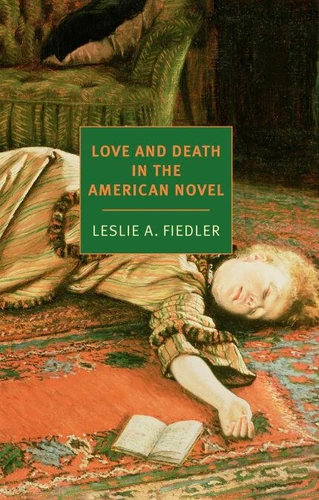
Love and Death in the American Novel
Par :Formats :
Disponible dans votre compte client Decitre ou Furet du Nord dès validation de votre commande. Le format ePub protégé est :
- Compatible avec une lecture sur My Vivlio (smartphone, tablette, ordinateur)
- Compatible avec une lecture sur liseuses Vivlio
- Pour les liseuses autres que Vivlio, vous devez utiliser le logiciel Adobe Digital Edition. Non compatible avec la lecture sur les liseuses Kindle, Remarkable et Sony
- Non compatible avec un achat hors France métropolitaine
 , qui est-ce ?
Notre partenaire de plateforme de lecture numérique où vous retrouverez l'ensemble de vos ebooks gratuitement
Pour en savoir plus sur nos ebooks, consultez notre aide en ligne ici
C'est si simple ! Lisez votre ebook avec l'app Vivlio sur votre tablette, mobile ou ordinateur :

- Nombre de pages512
- FormatePub
- ISBN978-1-68137-970-8
- EAN9781681379708
- Date de parution21/04/2026
- Protection num.Adobe DRM
- Taille2 Mo
- Infos supplémentairesepub
- ÉditeurNYRB Classics
Résumé
A provocative work of American literary criticism covering Edgar Allan Poe, Herman Melville, Mark Twain, Nathaniel Hawthorne, William Faulkner, and others. Fielder's groundbreaking work changed the way we see the American novel-and American culture at large-forever. Leslie A. Fiedler's Love and Death in the American Novel is a study of American fiction from its beginnings up through the 1960s. In this tour de force from the great mid-twentieth-century era of literary criticism, Fiedler argues that American literature is gothic at heart, marked by a terror of sexuality and an obsession with violence, escape, and death.
The American writer, he says, confronts a world that is "without a significant history or a substantial past; a world which had left behind the terror of Europe not for the innocence it dreamed of, but for new and special guilts associated with the rape of nature and the exploitation of dark-skinned people." Fiedler's own book, as brilliantly written as it is provocatively conceived, is itself a contribution to American literature.
His puckish suggestion is that we read it "not as a conventional scholarly book-or an eccentric one-but a kind of gothic novel (complete with touches of black humor) whose subject is American experience as recorded in our classic fiction."
The American writer, he says, confronts a world that is "without a significant history or a substantial past; a world which had left behind the terror of Europe not for the innocence it dreamed of, but for new and special guilts associated with the rape of nature and the exploitation of dark-skinned people." Fiedler's own book, as brilliantly written as it is provocatively conceived, is itself a contribution to American literature.
His puckish suggestion is that we read it "not as a conventional scholarly book-or an eccentric one-but a kind of gothic novel (complete with touches of black humor) whose subject is American experience as recorded in our classic fiction."