SOLDES
Jusqu'à -70% sur une sélection d'articles*

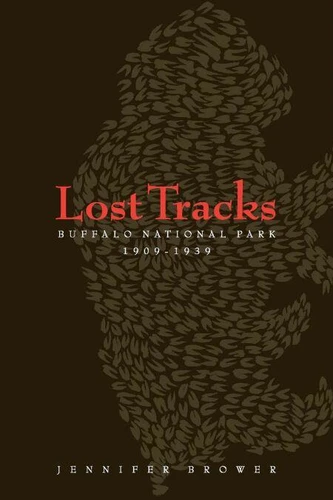
Lost Tracks. Buffalo National Park, 1909–1939
Par :Formats :
Disponible dans votre compte client Decitre ou Furet du Nord dès validation de votre commande. Le format PDF est :
- Compatible avec une lecture sur My Vivlio (smartphone, tablette, ordinateur)
- Compatible avec une lecture sur liseuses Vivlio
- Pour les liseuses autres que Vivlio, vous devez utiliser le logiciel Adobe Digital Edition. Non compatible avec la lecture sur les liseuses Kindle, Remarkable et Sony
 , qui est-ce ?
Notre partenaire de plateforme de lecture numérique où vous retrouverez l'ensemble de vos ebooks gratuitement
Pour en savoir plus sur nos ebooks, consultez notre aide en ligne ici
C'est si simple ! Lisez votre ebook avec l'app Vivlio sur votre tablette, mobile ou ordinateur :

- Nombre de pages193
- FormatPDF
- ISBN978-1-897425-11-4
- EAN9781897425114
- Date de parution01/06/2008
- Protection num.Digital Watermarking
- Taille10 Mo
- Infos supplémentairespdf
- ÉditeurAU Press
Résumé
While contemporaries and historians alike hailed the establishment of Buffalo National Park in Wainwright, Alberta as a wildlife saving effort, the political climate of the early twentieth century worked against its efforts to stem the decline of the plains buffalo in North America. However, the branch charged with operating the park, the Canadian Parks Branch, was never sufficiently funded and therefore the park was unable fulfill its species recovery aims.
And although cross-breeding experiments with bison and domestic cattle proved unfruitful and the attempts at commercializing the herd had no success, the population of the bison did increase as did the hope that this magnificent species might thrive again. By unravelling an intricate web of correspondence and other documentation, Brower reveals the fiscal and corporate management policies that doomed the herd and the park thereby providing important insight into successful wildlife management.
And although cross-breeding experiments with bison and domestic cattle proved unfruitful and the attempts at commercializing the herd had no success, the population of the bison did increase as did the hope that this magnificent species might thrive again. By unravelling an intricate web of correspondence and other documentation, Brower reveals the fiscal and corporate management policies that doomed the herd and the park thereby providing important insight into successful wildlife management.