
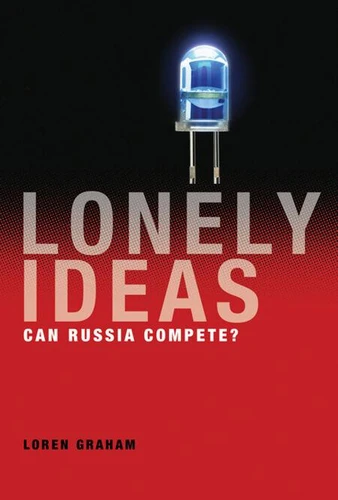
Lonely Ideas. Can Russia Compete?
Par :Formats :
Disponible dans votre compte client Decitre ou Furet du Nord dès validation de votre commande. Le format ePub protégé est :
- Compatible avec une lecture sur My Vivlio (smartphone, tablette, ordinateur)
- Compatible avec une lecture sur liseuses Vivlio
- Pour les liseuses autres que Vivlio, vous devez utiliser le logiciel Adobe Digital Edition. Non compatible avec la lecture sur les liseuses Kindle, Remarkable et Sony
- Non compatible avec un achat hors France métropolitaine
 , qui est-ce ?
Notre partenaire de plateforme de lecture numérique où vous retrouverez l'ensemble de vos ebooks gratuitement
Pour en savoir plus sur nos ebooks, consultez notre aide en ligne ici
C'est si simple ! Lisez votre ebook avec l'app Vivlio sur votre tablette, mobile ou ordinateur :

- Nombre de pages216
- FormatePub
- ISBN978-0-262-31739-9
- EAN9780262317399
- Date de parution13/09/2013
- Protection num.Adobe DRM
- Taille11 Mo
- Infos supplémentairesepub
- ÉditeurThe MIT Press
Résumé
An expert investigates Russia's long history of technological invention followed by commercial failure and points to new opportunities to break the pattern. When have you gone into an electronics store, picked up a desirable gadget, and found that it was labeled "Made in Russia"? Probably never. Russia, despite its epic intellectual achievements in music, literature, art, and pure science, is a negligible presence in world technology.
Despite its current leaders' ambitions to create a knowledge economy, Russia is economically dependent on gas and oil. In Lonely Ideas, Loren Graham investigates Russia's long history of technological invention followed by failure to commercialize and implement. For three centuries, Graham shows, Russia has been adept at developing technical ideas but abysmal at benefiting from them. From the seventeenth-century arms industry through twentieth-century Nobel-awarded work in lasers, Russia has failed to sustain its technological inventiveness.
Graham identifies a range of conditions that nurture technological innovation: a society that values inventiveness and practicality; an economic system that provides investment opportunities; a legal system that protects intellectual property; a political system that encourages innovation and success. Graham finds Russia lacking on all counts. He explains that Russia's failure to sustain technology, and its recurrent attempts to force modernization, reflect its political and social evolution and even its resistance to democratic principles.
But Graham points to new connections between Western companies and Russian researchers, new research institutions, a national focus on nanotechnology, and the establishment of Skolkovo, "a new technology city." Today, he argues, Russia has the best chance in its history to break its pattern of technological failure.
Despite its current leaders' ambitions to create a knowledge economy, Russia is economically dependent on gas and oil. In Lonely Ideas, Loren Graham investigates Russia's long history of technological invention followed by failure to commercialize and implement. For three centuries, Graham shows, Russia has been adept at developing technical ideas but abysmal at benefiting from them. From the seventeenth-century arms industry through twentieth-century Nobel-awarded work in lasers, Russia has failed to sustain its technological inventiveness.
Graham identifies a range of conditions that nurture technological innovation: a society that values inventiveness and practicality; an economic system that provides investment opportunities; a legal system that protects intellectual property; a political system that encourages innovation and success. Graham finds Russia lacking on all counts. He explains that Russia's failure to sustain technology, and its recurrent attempts to force modernization, reflect its political and social evolution and even its resistance to democratic principles.
But Graham points to new connections between Western companies and Russian researchers, new research institutions, a national focus on nanotechnology, and the establishment of Skolkovo, "a new technology city." Today, he argues, Russia has the best chance in its history to break its pattern of technological failure.