Author
Nouveauté
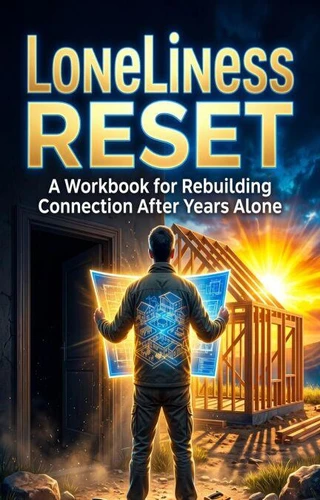
Loneliness Reset. A Workbook for Rebuilding Connection After Years Alone
Par :Formats :
Disponible dans votre compte client Decitre ou Furet du Nord dès validation de votre commande. Le format ePub est :
- Compatible avec une lecture sur My Vivlio (smartphone, tablette, ordinateur)
- Compatible avec une lecture sur liseuses Vivlio
- Pour les liseuses autres que Vivlio, vous devez utiliser le logiciel Adobe Digital Edition. Non compatible avec la lecture sur les liseuses Kindle, Remarkable et Sony
 , qui est-ce ?
Notre partenaire de plateforme de lecture numérique où vous retrouverez l'ensemble de vos ebooks gratuitement
Pour en savoir plus sur nos ebooks, consultez notre aide en ligne ici
C'est si simple ! Lisez votre ebook avec l'app Vivlio sur votre tablette, mobile ou ordinateur :

- Nombre de pages108
- FormatePub
- ISBN978-3-565-56314-2
- EAN9783565563142
- Date de parution15/07/2026
- Protection num.pas de protection
- Taille661 Ko
- Infos supplémentairesepub
- ÉditeurEmphaloz Publishing House
Résumé
It begins with a moment of jarring silence-the realization that days have passed without speaking a word to another human. For millions, this is not a fleeting mood but a chronic state of being, a physical condition Dr. Selene Forrester terms 'social atrophy.'
Just as an unused muscle withers, the brain's capacity for connection degrades with prolonged isolation. The ability to make small talk, hold eye contact, or read social cues becomes a source of profound anxiety, a mechanical failure rather than a character flaw.
This workbook investigates the anatomy of that failure, moving beyond platitudes to present a rigorous, data-driven methodology for rebuilding. Through diagnostic tools like the 'Interaction Ledger' and the 'Friction Map, ' readers are guided to perform a cold, objective audit of their isolation. The approach is not about finding sudden courage, but about systematically designing an 'Anchor Event' and a 'Weak Tie Circuit'-a tangible infrastructure for belonging.
This is not a book about feelings; it is a set of architectural blueprints for methodically constructing a life of connection. By the final chapter, the reader understands how to build the house where belonging can safely live.
This workbook investigates the anatomy of that failure, moving beyond platitudes to present a rigorous, data-driven methodology for rebuilding. Through diagnostic tools like the 'Interaction Ledger' and the 'Friction Map, ' readers are guided to perform a cold, objective audit of their isolation. The approach is not about finding sudden courage, but about systematically designing an 'Anchor Event' and a 'Weak Tie Circuit'-a tangible infrastructure for belonging.
This is not a book about feelings; it is a set of architectural blueprints for methodically constructing a life of connection. By the final chapter, the reader understands how to build the house where belonging can safely live.