
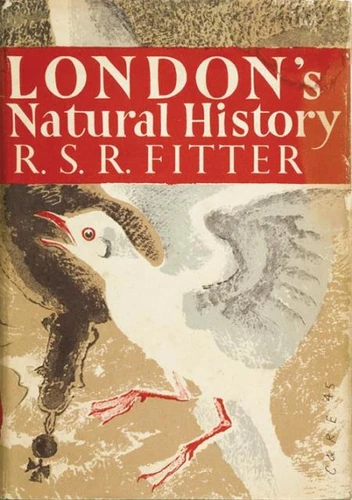
London’s Natural History
Par :Formats :
Disponible dans votre compte client Decitre ou Furet du Nord dès validation de votre commande. Le format ePub protégé est :
- Compatible avec une lecture sur My Vivlio (smartphone, tablette, ordinateur)
- Compatible avec une lecture sur liseuses Vivlio
- Pour les liseuses autres que Vivlio, vous devez utiliser le logiciel Adobe Digital Edition. Non compatible avec la lecture sur les liseuses Kindle, Remarkable et Sony
- Non compatible avec un achat hors France métropolitaine
 , qui est-ce ?
Notre partenaire de plateforme de lecture numérique où vous retrouverez l'ensemble de vos ebooks gratuitement
Pour en savoir plus sur nos ebooks, consultez notre aide en ligne ici
C'est si simple ! Lisez votre ebook avec l'app Vivlio sur votre tablette, mobile ou ordinateur :

- Nombre de pages296
- FormatePub
- ISBN978-0-00-740607-4
- EAN9780007406074
- Date de parution21/12/2011
- Protection num.Adobe DRM
- Infos supplémentairesepub
- ÉditeurCollins
Résumé
London's Natural History describes how the spread of man's activities has affected the plants and animals in them, destroying some and creating others. This edition is exclusive to newnaturalists.com
Up to now there has been no real attempt to write a comprehensive history of a great human community in terms of the animals and plants it has displaced, changed, moved and removed, introduced, conserved, lost or forgotten.
In selecting London as an area for such study Mr. Fitter, himself a Londoner, takes the world's largest aggregation of human beings living in a single community and in many ways the most interesting perhaps of all regions of the British Isles, and shows how the spread of man's activities has affected the plants and animals in them, destroying some, creating others. Wild birds like the rook and jackdaw have been driven further from St.
Paul's by the relentless advance of London's tide of bricks, others like the woodpigeon and moorhen have moved in to colonise those oases of greenery, the parks. The influence of international trade has brought many new creatures to the Port of London, most of them undesirable.
In selecting London as an area for such study Mr. Fitter, himself a Londoner, takes the world's largest aggregation of human beings living in a single community and in many ways the most interesting perhaps of all regions of the British Isles, and shows how the spread of man's activities has affected the plants and animals in them, destroying some, creating others. Wild birds like the rook and jackdaw have been driven further from St.
Paul's by the relentless advance of London's tide of bricks, others like the woodpigeon and moorhen have moved in to colonise those oases of greenery, the parks. The influence of international trade has brought many new creatures to the Port of London, most of them undesirable.