SOLDES
Jusqu'à -70% sur une sélection d'articles*

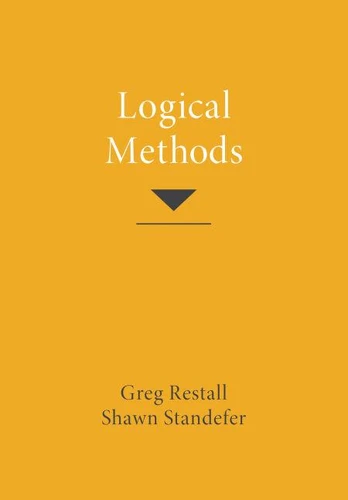
Logical Methods
Par : ,Formats :
Disponible dans votre compte client Decitre ou Furet du Nord dès validation de votre commande. Le format ePub protégé est :
- Compatible avec une lecture sur My Vivlio (smartphone, tablette, ordinateur)
- Compatible avec une lecture sur liseuses Vivlio
- Pour les liseuses autres que Vivlio, vous devez utiliser le logiciel Adobe Digital Edition. Non compatible avec la lecture sur les liseuses Kindle, Remarkable et Sony
- Non compatible avec un achat hors France métropolitaine
 , qui est-ce ?
Notre partenaire de plateforme de lecture numérique où vous retrouverez l'ensemble de vos ebooks gratuitement
Pour en savoir plus sur nos ebooks, consultez notre aide en ligne ici
C'est si simple ! Lisez votre ebook avec l'app Vivlio sur votre tablette, mobile ou ordinateur :

- Nombre de pages284
- FormatePub
- ISBN978-0-262-37270-1
- EAN9780262372701
- Date de parution03/01/2023
- Protection num.Adobe DRM
- Taille6 Mo
- Infos supplémentairesepub
- ÉditeurThe MIT Press
Résumé
An accessible introduction to philosophical logic, suitable for undergraduate courses and above. Rigorous yet accessible, Logical Methods introduces logical tools used in philosophy-including proofs, models, modal logics, meta-theory, two-dimensional logics, and quantification-for philosophy students at the undergraduate level and above. The approach developed by Greg Restall and Shawn Standefer is distinct from other texts because it presents proof construction on equal footing with model building and emphasizes connections to other areas of philosophy as the tools are developed. Throughout, the material draws on a broad range of examples to show readers how to develop and master tools of proofs and models for propositional, modal, and predicate logic; to construct and analyze arguments and to find their structure; to build counterexamples; to understand the broad sweep of formal logic's development in the twentieth and twenty-first centuries; and to grasp key concepts used again and again in philosophy. This text is essential to philosophy curricula, regardless of specialization, and will also find wide use in mathematics and computer science programs. Features: An accessible introduction to proof theory for readers with no background in logic Covers proofs, models, modal logics, meta-theory, two-dimensional logics, quantification, and many other topics Provides tools and techniques of particular interest to philosophers and philosophical logicians Features short summaries of key concepts and skills at the end of each chapter Offers chapter-by-chapter exercises in two categories: basic, designed to reinforce important ideas; and challenge, designed to push students' understanding and developing skills in new directions