SOLDES
Jusqu'à -70% sur une sélection d'articles*

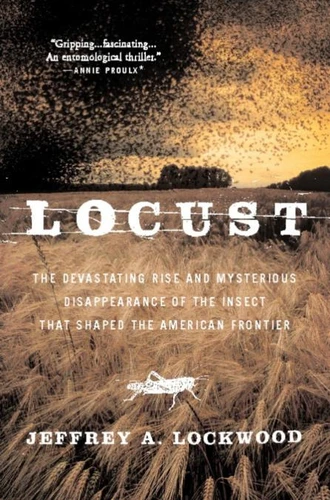
Locust. The Devastating Rise and Mysterious Disappearance of the Insect that Shaped the American Frontier
Par :Formats :
Disponible dans votre compte client Decitre ou Furet du Nord dès validation de votre commande. Le format ePub protégé est :
- Compatible avec une lecture sur My Vivlio (smartphone, tablette, ordinateur)
- Compatible avec une lecture sur liseuses Vivlio
- Pour les liseuses autres que Vivlio, vous devez utiliser le logiciel Adobe Digital Edition. Non compatible avec la lecture sur les liseuses Kindle, Remarkable et Sony
- Non compatible avec un achat hors France métropolitaine
 , qui est-ce ?
Notre partenaire de plateforme de lecture numérique où vous retrouverez l'ensemble de vos ebooks gratuitement
Pour en savoir plus sur nos ebooks, consultez notre aide en ligne ici
C'est si simple ! Lisez votre ebook avec l'app Vivlio sur votre tablette, mobile ou ordinateur :

- Nombre de pages320
- FormatePub
- ISBN978-0-7867-3887-8
- EAN9780786738878
- Date de parution27/04/2009
- Protection num.Adobe DRM
- Infos supplémentairesepub
- ÉditeurBasic Books
Résumé
Throughout the nineteenth century, swarms of locusts regularly swept across the continent, turning noon into dusk, demolishing farm communities, and bringing trains to a halt as the crushed bodies of insects greased the rails. In 1876, the U. S. Congress declared the locust "the single greatest impediment to the settlement of the country." From the Dakotas to Texas, from California to Iowa, the swarms pushed thousands of settlers to the brink of starvation, prompting the federal government to enlist some of the greatest scientific minds of the day and thereby jumpstarting the fledgling science of entomology.
Over the next few decades, the Rocky Mountain locust suddenly -- and mysteriously -- vanished. A century later, Jeffrey Lockwood set out to discover why. Unconvinced by the reigning theories, he searched for new evidence in musty books, crumbling maps, and crevassed glaciers, eventually piecing together the elusive answer: A group of early settlers unwittingly destroyed the locust's sanctuaries just as the insect was experiencing a natural population crash.
Drawing on historical accounts and modern science, Locust brings to life the cultural, economic, and political forces at work in America in the late-nineteenth century, even as it solves one of the greatest ecological mysteries of our time.
Over the next few decades, the Rocky Mountain locust suddenly -- and mysteriously -- vanished. A century later, Jeffrey Lockwood set out to discover why. Unconvinced by the reigning theories, he searched for new evidence in musty books, crumbling maps, and crevassed glaciers, eventually piecing together the elusive answer: A group of early settlers unwittingly destroyed the locust's sanctuaries just as the insect was experiencing a natural population crash.
Drawing on historical accounts and modern science, Locust brings to life the cultural, economic, and political forces at work in America in the late-nineteenth century, even as it solves one of the greatest ecological mysteries of our time.