SOLDES
Jusqu'à -70% sur une sélection d'articles*

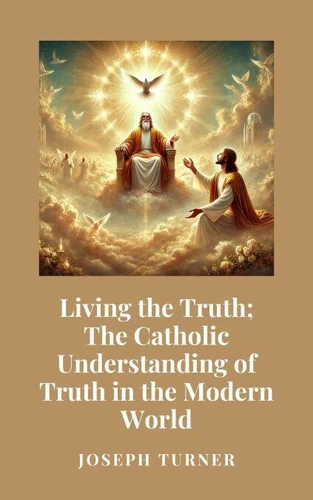
Living the Truth: The Catholic Understanding of Truth in the Modern World
Par :Formats :
Disponible dans votre compte client Decitre ou Furet du Nord dès validation de votre commande. Le format ePub est :
- Compatible avec une lecture sur My Vivlio (smartphone, tablette, ordinateur)
- Compatible avec une lecture sur liseuses Vivlio
- Pour les liseuses autres que Vivlio, vous devez utiliser le logiciel Adobe Digital Edition. Non compatible avec la lecture sur les liseuses Kindle, Remarkable et Sony
 , qui est-ce ?
Notre partenaire de plateforme de lecture numérique où vous retrouverez l'ensemble de vos ebooks gratuitement
Pour en savoir plus sur nos ebooks, consultez notre aide en ligne ici
C'est si simple ! Lisez votre ebook avec l'app Vivlio sur votre tablette, mobile ou ordinateur :

- FormatePub
- ISBN8230249481
- EAN9798230249481
- Date de parution23/02/2025
- Protection num.pas de protection
- Infos supplémentairesepub
- ÉditeurIndependently Published
Résumé
The concept of truth in Catholicism is inextricably linked to the divine nature of God and His revelation to mankind. For the Catholic Church, truth is not a mere abstract idea or philosophical construct; it is a person, Jesus Christ, who is the embodiment of truth. The famous declaration in the Gospel of John, "I am the Way, the Truth, and the Life" (John 14:6), encapsulates the foundational Christian understanding that truth is not something we can merely conceptualize or deduce from human reason, but it is something that is revealed and lived in the person of Jesus.
This understanding of truth transcends the limits of temporal knowledge and points to an eternal reality-the divine revelation of God to the world. Catholicism teaches that all truth ultimately stems from God. In the creation narrative, God speaks the truth into existence. "In the beginning, God created the heavens and the earth" (Genesis 1:1), and by doing so, He created a reality that corresponds to His will.
The idea of truth in Catholic thought is not limited to factual correctness; it encompasses the entirety of existence, moral order, and divine purpose. Truth, therefore, is a reflection of God's own nature, an aspect of the divine Logos that is present in all of creation. This understanding has profound implications for human beings, who, as creatures made in the image of God, are called to live in accordance with this ultimate truth.
This understanding of truth transcends the limits of temporal knowledge and points to an eternal reality-the divine revelation of God to the world. Catholicism teaches that all truth ultimately stems from God. In the creation narrative, God speaks the truth into existence. "In the beginning, God created the heavens and the earth" (Genesis 1:1), and by doing so, He created a reality that corresponds to His will.
The idea of truth in Catholic thought is not limited to factual correctness; it encompasses the entirety of existence, moral order, and divine purpose. Truth, therefore, is a reflection of God's own nature, an aspect of the divine Logos that is present in all of creation. This understanding has profound implications for human beings, who, as creatures made in the image of God, are called to live in accordance with this ultimate truth.
A propos de Joseph Turner
2,99 €

2,99 €
2,99 €
2,99 €