An extensive body of literature on Indigenous knowledge and ways of knowing has been written since the 1980s. This research has for the most part been conducted by scholars operating within Western epistemological frameworks that tend not only to deny the subjectivity of knowledge but also to privilege masculine authority. As a result, the information gathered predominantly reflects the types of knowledge traditionally held by men, yielding a perspective that is at once gendered and incomplete.
Even those academics, communities, and governments interested in consulting with Indigenous peoples for the purposes of planning, monitoring, and managing land use have largely ignored the knowledge traditionally produced, preserved, and transmitted by Indigenous women. While this omission reflects patriarchal assumptions, it may also be the result of the reductionist tendencies of researchers, who have attempted to organize Indigenous knowledge so as to align it with Western scientific categories, and of policy makers, who have sought to deploy such knowledge in the service of external priorities.
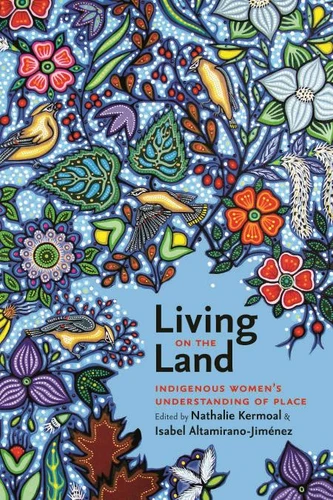
Such efforts to apply Indigenous knowledge have had the effect of abstracting this knowledge from place as well as from the world view and community-and by extension the gender-to which it is inextricably connected. Living on the Land examines how patriarchy, gender, and colonialism have shaped the experiences of Indigenous women as both knowers and producers of knowledge. From a variety of methodological perspectives, contributors to the volume explore the nature and scope of Indigenous women's knowledge, its rootedness in relationships both human and spiritual, and its inseparability from land and landscape.
From the reconstruction of cultural and ecological heritage by Naskapi women in Québec to the medical expertise of Métis women in western Canada to the mapping and securing of land rights in Nicaragua, Living on the Land focuses on the integral role of women as stewards of the land and governors of the community. Together, these contributions point to a distinctive set of challenges and possibilities for Indigenous women and their communities.
Contributors include Denise Geoffroy, Kathy L. Hodgson-Smith, Kahente Horn-Miller, Shalene Jobin, Carole Lévesque, Leanna Parker, Brenda Parlee, Geneviève Polèse, Zoe Todd, and Kristine Wray.
An extensive body of literature on Indigenous knowledge and ways of knowing has been written since the 1980s. This research has for the most part been conducted by scholars operating within Western epistemological frameworks that tend not only to deny the subjectivity of knowledge but also to privilege masculine authority. As a result, the information gathered predominantly reflects the types of knowledge traditionally held by men, yielding a perspective that is at once gendered and incomplete.
Even those academics, communities, and governments interested in consulting with Indigenous peoples for the purposes of planning, monitoring, and managing land use have largely ignored the knowledge traditionally produced, preserved, and transmitted by Indigenous women. While this omission reflects patriarchal assumptions, it may also be the result of the reductionist tendencies of researchers, who have attempted to organize Indigenous knowledge so as to align it with Western scientific categories, and of policy makers, who have sought to deploy such knowledge in the service of external priorities.
Such efforts to apply Indigenous knowledge have had the effect of abstracting this knowledge from place as well as from the world view and community-and by extension the gender-to which it is inextricably connected. Living on the Land examines how patriarchy, gender, and colonialism have shaped the experiences of Indigenous women as both knowers and producers of knowledge. From a variety of methodological perspectives, contributors to the volume explore the nature and scope of Indigenous women's knowledge, its rootedness in relationships both human and spiritual, and its inseparability from land and landscape.
From the reconstruction of cultural and ecological heritage by Naskapi women in Québec to the medical expertise of Métis women in western Canada to the mapping and securing of land rights in Nicaragua, Living on the Land focuses on the integral role of women as stewards of the land and governors of the community. Together, these contributions point to a distinctive set of challenges and possibilities for Indigenous women and their communities.
Contributors include Denise Geoffroy, Kathy L. Hodgson-Smith, Kahente Horn-Miller, Shalene Jobin, Carole Lévesque, Leanna Parker, Brenda Parlee, Geneviève Polèse, Zoe Todd, and Kristine Wray.


 , qui est-ce ?
