SOLDES
Jusqu'à -70% sur une sélection d'articles*

Nouveauté
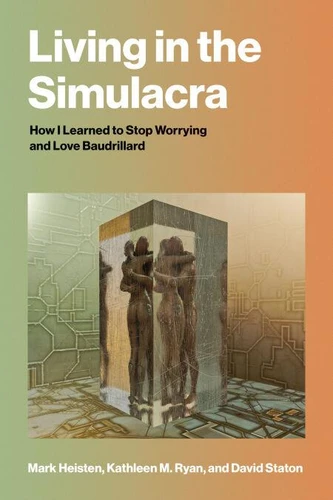
Living in the Simulacra. How I Learned to Stop Worrying and Love Baudrillard
Par : , ,Formats :
Disponible dans votre compte client Decitre ou Furet du Nord dès validation de votre commande. Le format ePub protégé est :
- Compatible avec une lecture sur My Vivlio (smartphone, tablette, ordinateur)
- Compatible avec une lecture sur liseuses Vivlio
- Pour les liseuses autres que Vivlio, vous devez utiliser le logiciel Adobe Digital Edition. Non compatible avec la lecture sur les liseuses Kindle, Remarkable et Sony
- Non compatible avec un achat hors France métropolitaine
 , qui est-ce ?
Notre partenaire de plateforme de lecture numérique où vous retrouverez l'ensemble de vos ebooks gratuitement
Pour en savoir plus sur nos ebooks, consultez notre aide en ligne ici
C'est si simple ! Lisez votre ebook avec l'app Vivlio sur votre tablette, mobile ou ordinateur :

- Nombre de pages248
- FormatePub
- ISBN978-0-262-05312-9
- EAN9780262053129
- Date de parution23/06/2026
- Protection num.Adobe DRM
- Taille15 Mo
- Infos supplémentairesepub
- ÉditeurThe MIT Press
Résumé
What is real in the twenty-first century, and how humans can navigate this shifting world. Despite a twenty-first-century plethora of images and our collective understanding that digital tools may alter the truth, human beings have a strong belief in the truth of the image: "pix or it didn't happen." But what does it mean when the image itself is fabricated? Or when AI is used to create audio or visual content that has the appearance of "truth" but is not, in fact, real? In Living in the Simulacra, Mark Heisten, Kathleen Ryan, and David Staton use Baudrillard's concept of the simulacra to conceptualize the contemporary media landscape.
From "post-truth" notions of news, advertising, and public relations to digital avatars replacing human interaction, the modern media landscape is, to a large degree, a pure simulacrum. Humans are entering into this space as if it were something similar to the physical world. It is not. This can be problematic, but it can also lead to the creation of new knowledge and opportunities for understanding.
The book uses the concept of the simulacra, as developed by Plato, Deleuze, and Baudrillard, as an overarching framework to explore how the digital landscape has transformed our understanding of reality. Through practical examples and in-depth case studies, it explores how the simulacra has taken over contemporary life-as well as the ethical implications for media producers and audiences within that space.
From "post-truth" notions of news, advertising, and public relations to digital avatars replacing human interaction, the modern media landscape is, to a large degree, a pure simulacrum. Humans are entering into this space as if it were something similar to the physical world. It is not. This can be problematic, but it can also lead to the creation of new knowledge and opportunities for understanding.
The book uses the concept of the simulacra, as developed by Plato, Deleuze, and Baudrillard, as an overarching framework to explore how the digital landscape has transformed our understanding of reality. Through practical examples and in-depth case studies, it explores how the simulacra has taken over contemporary life-as well as the ethical implications for media producers and audiences within that space.