
Living in Denial. Climate Change, Emotions, and Everyday Life
Par :Formats :
Disponible dans votre compte client Decitre ou Furet du Nord dès validation de votre commande. Le format ePub protégé est :
- Compatible avec une lecture sur My Vivlio (smartphone, tablette, ordinateur)
- Compatible avec une lecture sur liseuses Vivlio
- Pour les liseuses autres que Vivlio, vous devez utiliser le logiciel Adobe Digital Edition. Non compatible avec la lecture sur les liseuses Kindle, Remarkable et Sony
- Non compatible avec un achat hors France métropolitaine
 , qui est-ce ?
Notre partenaire de plateforme de lecture numérique où vous retrouverez l'ensemble de vos ebooks gratuitement
Pour en savoir plus sur nos ebooks, consultez notre aide en ligne ici
C'est si simple ! Lisez votre ebook avec l'app Vivlio sur votre tablette, mobile ou ordinateur :

- Nombre de pages304
- FormatePub
- ISBN978-0-262-29498-0
- EAN9780262294980
- Date de parution11/03/2011
- Protection num.Adobe DRM
- Taille2 Mo
- Infos supplémentairesepub
- ÉditeurThe MIT Press
Résumé
An analysis of why people with knowledge about climate change often fail to translate that knowledge into action. Global warming is the most significant environmental issue of our time, yet public response in Western nations has been meager. Why have so few taken any action? In Living in Denial, sociologist Kari Norgaard searches for answers to this question, drawing on interviews and ethnographic data from her study of "Bygdaby, " the fictional name of an actual rural community in western Norway, during the unusually warm winter of 2000-2001.
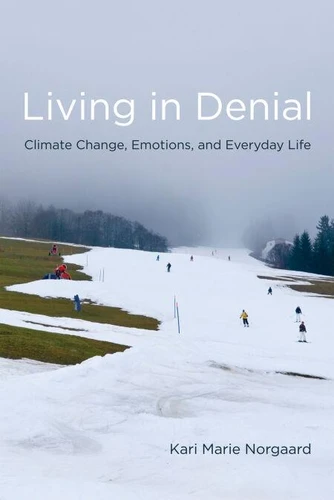
In 2000-2001 the first snowfall came to Bygdaby two months later than usual; ice fishing was impossible; and the ski industry had to invest substantially in artificial snow-making. Stories in local and national newspapers linked the warm winter explicitly to global warming. Yet residents did not write letters to the editor, pressure politicians, or cut down on use of fossil fuels. Norgaard attributes this lack of response to the phenomenon of socially organized denial, by which information about climate science is known in the abstract but disconnected from political, social, and private life, and sees this as emblematic of how citizens of industrialized countries are responding to global warming.
Norgaard finds that for the highly educated and politically savvy residents of Bygdaby, global warming was both common knowledge and unimaginable. Norgaard traces this denial through multiple levels, from emotions to cultural norms to political economy. Her report from Bygdaby, supplemented by comparisons throughout the book to the United States, tells a larger story behind our paralysis in the face of today's alarming predictions from climate scientists.
In 2000-2001 the first snowfall came to Bygdaby two months later than usual; ice fishing was impossible; and the ski industry had to invest substantially in artificial snow-making. Stories in local and national newspapers linked the warm winter explicitly to global warming. Yet residents did not write letters to the editor, pressure politicians, or cut down on use of fossil fuels. Norgaard attributes this lack of response to the phenomenon of socially organized denial, by which information about climate science is known in the abstract but disconnected from political, social, and private life, and sees this as emblematic of how citizens of industrialized countries are responding to global warming.
Norgaard finds that for the highly educated and politically savvy residents of Bygdaby, global warming was both common knowledge and unimaginable. Norgaard traces this denial through multiple levels, from emotions to cultural norms to political economy. Her report from Bygdaby, supplemented by comparisons throughout the book to the United States, tells a larger story behind our paralysis in the face of today's alarming predictions from climate scientists.