
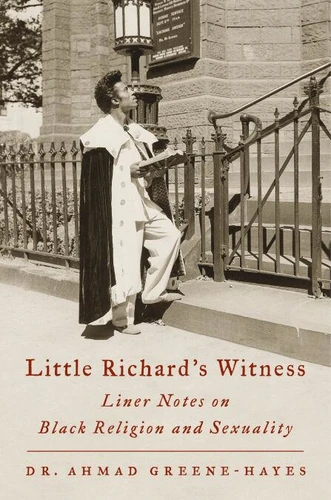
Little Richard's Witness. Liner Notes on Black Religion and Sexuality
Par : ,Formats :
Disponible dans votre compte client Decitre ou Furet du Nord dès validation de votre commande. Le format ePub protégé est :
- Compatible avec une lecture sur My Vivlio (smartphone, tablette, ordinateur)
- Compatible avec une lecture sur liseuses Vivlio
- Pour les liseuses autres que Vivlio, vous devez utiliser le logiciel Adobe Digital Edition. Non compatible avec la lecture sur les liseuses Kindle, Remarkable et Sony
- Non compatible avec un achat hors France métropolitaine
 , qui est-ce ?
Notre partenaire de plateforme de lecture numérique où vous retrouverez l'ensemble de vos ebooks gratuitement
Pour en savoir plus sur nos ebooks, consultez notre aide en ligne ici
C'est si simple ! Lisez votre ebook avec l'app Vivlio sur votre tablette, mobile ou ordinateur :

- Nombre de pages224
- Date de parution23/02/2027
- FormatePub
- ISBN978-0-593-83484-8
- EAN9780593834848
- Protection num.Adobe DRM
- Infos supplémentairesepub
- ÉditeurPenguin Press
Résumé
An intimate view into the life of Little Richard, the trailblazing artist who helped create rock 'n' roll out of the Black church traditions of the Jim Crow South-a rousing elegy for the Black church boy who harnessed his queerness to become one of the world's great performers, even as he preached that the same queerness would bring damnationRichard Wayne Penniman's parents named him "Ricardo, " but his birth certificate read "Richard"; bureaucrats rarely cared enough to get a Negro's name right in Depression-era Jim Crow Georgia, when many Black communities were struggling to determine what constituted normal conduct in the aftermath of slavery.
Wherever that boundary was, Richard existed miles beyond it: He was a "sissy" boy, an evident fact that earned him brutal beatings from his father and sexual abuse from the church women meant to care for him. Richard's salvation was that he came of age during the golden age of gospel music, and he loved to sing-and sing loud. At fifteen, kicked out of his father's house, Richard was selling Coca-Cola at the local auditorium when he met his favorite singer, the gospel star Sister Rosetta Tharpe, who insisted he join her on stage.
Sister Rosetta, rumored to be queer herself, decided to take the boy under her wing. So began a career that would change the course of music history as well as intensify the contradictions within the soul of a man who would reach great fame before renouncing it to become a seminarian and later a Bible salesman. Ahmad Greene-Hayes, a bold, pathbreaking scholar at Harvard Divinity School who is himself Black and queer, recognizes his own church upbringing in Richard's and resolves to witness the aspects of Richard's life that remained shameful, half hidden, unresolved.
Little Richard's Witness culls from vinyl, liner notes, Seventh-day Adventist papers, queer periodicals, and other ephemeral sources to glimpse the man as he was, reading between the lines of both Richard's sermons and his extravagant stage performances. There, we find competing theologies of race, sexuality, and Black music in the twentieth century-theologies that resound again in our present moment of queer repression and racial violence propagated by a Christianity that fails to practice God's love.
Wherever that boundary was, Richard existed miles beyond it: He was a "sissy" boy, an evident fact that earned him brutal beatings from his father and sexual abuse from the church women meant to care for him. Richard's salvation was that he came of age during the golden age of gospel music, and he loved to sing-and sing loud. At fifteen, kicked out of his father's house, Richard was selling Coca-Cola at the local auditorium when he met his favorite singer, the gospel star Sister Rosetta Tharpe, who insisted he join her on stage.
Sister Rosetta, rumored to be queer herself, decided to take the boy under her wing. So began a career that would change the course of music history as well as intensify the contradictions within the soul of a man who would reach great fame before renouncing it to become a seminarian and later a Bible salesman. Ahmad Greene-Hayes, a bold, pathbreaking scholar at Harvard Divinity School who is himself Black and queer, recognizes his own church upbringing in Richard's and resolves to witness the aspects of Richard's life that remained shameful, half hidden, unresolved.
Little Richard's Witness culls from vinyl, liner notes, Seventh-day Adventist papers, queer periodicals, and other ephemeral sources to glimpse the man as he was, reading between the lines of both Richard's sermons and his extravagant stage performances. There, we find competing theologies of race, sexuality, and Black music in the twentieth century-theologies that resound again in our present moment of queer repression and racial violence propagated by a Christianity that fails to practice God's love.