SOLDES
Jusqu'à -70% sur une sélection d'articles*
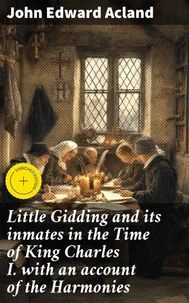
Little Gidding and its inmates in the Time of King Charles I. with an account of the Harmonies
Par :Formats :
Disponible dans votre compte client Decitre ou Furet du Nord dès validation de votre commande. Le format ePub est :
- Compatible avec une lecture sur My Vivlio (smartphone, tablette, ordinateur)
- Compatible avec une lecture sur liseuses Vivlio
- Pour les liseuses autres que Vivlio, vous devez utiliser le logiciel Adobe Digital Edition. Non compatible avec la lecture sur les liseuses Kindle, Remarkable et Sony
 , qui est-ce ?
Notre partenaire de plateforme de lecture numérique où vous retrouverez l'ensemble de vos ebooks gratuitement
Pour en savoir plus sur nos ebooks, consultez notre aide en ligne ici
C'est si simple ! Lisez votre ebook avec l'app Vivlio sur votre tablette, mobile ou ordinateur :

- Nombre de pages32
- FormatePub
- ISBN859-65--4737903-4
- EAN8596547379034
- Date de parution16/09/2022
- Protection num.Digital Watermarking
- Taille296 Ko
- Infos supplémentairesepub
- ÉditeurDIGICAT
Résumé
In "Little Gidding and its Inmates in the Time of King Charles I: With an Account of the Harmonies, " John Edward Acland explores the intricate web of social, religious, and artistic life at the renowned Little Gidding community. Drawing from historical records and contemporaneous writings, Acland weaves a narrative rich in detail, revealing how this Anglican sanctuary became a site of intellectual and spiritual refuge during a turbulent era in English history.
His literary style melds anecdotal evidence with scholarly analysis, offering readers not just a historical account, but a vivid portrayal of the ideals and struggles that shaped the values of the 17th century. John Edward Acland, a noted historian and scholar of early modern England, was deeply influenced by his own background in Puritan thought and the socio-political currents of his time. His academic pursuits often intersected with an interest in the intersection of spirituality and scholarship.
Acland's own experiences in the broader cultural landscape of England likely provided the impetus for his meticulous examination of Little Gidding, a notable example of a spiritual community striving for harmony amidst societal discord. This book is a vital read for anyone interested in the nuanced interplay between faith, art, and societal change during the English Civil War. Acland's insightful analysis not only broadens our understanding of Little Gidding but also invites us to consider the broader implications of such communities within the tapestry of English history.
It is a must-read for historians, theologians, and literary enthusiasts alike.
His literary style melds anecdotal evidence with scholarly analysis, offering readers not just a historical account, but a vivid portrayal of the ideals and struggles that shaped the values of the 17th century. John Edward Acland, a noted historian and scholar of early modern England, was deeply influenced by his own background in Puritan thought and the socio-political currents of his time. His academic pursuits often intersected with an interest in the intersection of spirituality and scholarship.
Acland's own experiences in the broader cultural landscape of England likely provided the impetus for his meticulous examination of Little Gidding, a notable example of a spiritual community striving for harmony amidst societal discord. This book is a vital read for anyone interested in the nuanced interplay between faith, art, and societal change during the English Civil War. Acland's insightful analysis not only broadens our understanding of Little Gidding but also invites us to consider the broader implications of such communities within the tapestry of English history.
It is a must-read for historians, theologians, and literary enthusiasts alike.