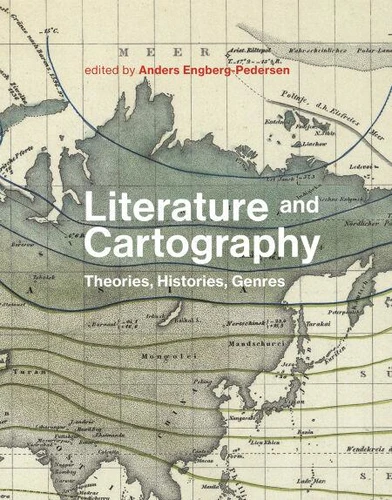
Literature and Cartography. Theories, Histories, Genres
Par :Formats :
Disponible dans votre compte client Decitre ou Furet du Nord dès validation de votre commande. Le format ePub protégé est :
- Compatible avec une lecture sur My Vivlio (smartphone, tablette, ordinateur)
- Compatible avec une lecture sur liseuses Vivlio
- Pour les liseuses autres que Vivlio, vous devez utiliser le logiciel Adobe Digital Edition. Non compatible avec la lecture sur les liseuses Kindle, Remarkable et Sony
- Non compatible avec un achat hors France métropolitaine
 , qui est-ce ?
Notre partenaire de plateforme de lecture numérique où vous retrouverez l'ensemble de vos ebooks gratuitement
Pour en savoir plus sur nos ebooks, consultez notre aide en ligne ici
C'est si simple ! Lisez votre ebook avec l'app Vivlio sur votre tablette, mobile ou ordinateur :

- Nombre de pages480
- FormatePub
- ISBN978-0-262-34225-4
- EAN9780262342254
- Date de parution24/11/2017
- Protection num.Adobe DRM
- Taille43 Mo
- Infos supplémentairesepub
- ÉditeurThe MIT Press
Résumé
The relationship of texts and maps, and the mappability of literature, examined from Homer to Houellebecq. Literary authors have frequently called on elements of cartography to ground fictional space, to visualize sites, and to help readers get their bearings in the imaginative world of the text. Today, the convergence of digital mapping and globalization has spurred a cartographic turn in literature.
This book gathers leading scholars to consider the relationship of literature and cartography. Generously illustrated with full-color maps and visualizations, it offers the first systematic overview of an emerging approach to the study of literature. The literary map is not merely an illustrative guide but represents a set of relations and tensions that raise questions about representation, fiction, and space.
Is literature even mappable? In exploring the cartographic components of literature, the contributors have not only brought literary theory to bear on the map but have also enriched the vocabulary and perspectives of literary studies with cartographic terms. After establishing the theoretical and methodological terrain, they trace important developments in the history of literary cartography, considering topics that include Homer and Joyce, Goethe and the representation of nature, and African cartographies.
Finally, they consider cartographic genres that reveal the broader connections between texts and maps, discussing literary map genres in American literature and the coexistence of image and text in early maps. When cartographic aspirations outstripped factual knowledge, mapmakers turned to textual fictions. ContributorsJean-Marc Besse, Bruno Bosteels, Patrick M. Bray, Martin Brückner, Tom Conley, Jörg Dünne, Anders Engberg-Pedersen, John K.
Noyes, Ricardo Padrón, Barbara Piatti, Simone Pinet, Clara Rowland, Oliver Simons, Robert Stockhammer, Dominic Thomas, Burkhardt Wolf
This book gathers leading scholars to consider the relationship of literature and cartography. Generously illustrated with full-color maps and visualizations, it offers the first systematic overview of an emerging approach to the study of literature. The literary map is not merely an illustrative guide but represents a set of relations and tensions that raise questions about representation, fiction, and space.
Is literature even mappable? In exploring the cartographic components of literature, the contributors have not only brought literary theory to bear on the map but have also enriched the vocabulary and perspectives of literary studies with cartographic terms. After establishing the theoretical and methodological terrain, they trace important developments in the history of literary cartography, considering topics that include Homer and Joyce, Goethe and the representation of nature, and African cartographies.
Finally, they consider cartographic genres that reveal the broader connections between texts and maps, discussing literary map genres in American literature and the coexistence of image and text in early maps. When cartographic aspirations outstripped factual knowledge, mapmakers turned to textual fictions. ContributorsJean-Marc Besse, Bruno Bosteels, Patrick M. Bray, Martin Brückner, Tom Conley, Jörg Dünne, Anders Engberg-Pedersen, John K.
Noyes, Ricardo Padrón, Barbara Piatti, Simone Pinet, Clara Rowland, Oliver Simons, Robert Stockhammer, Dominic Thomas, Burkhardt Wolf