
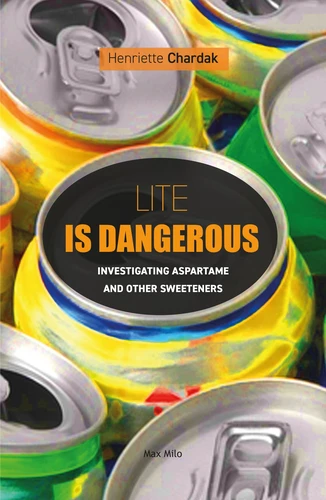
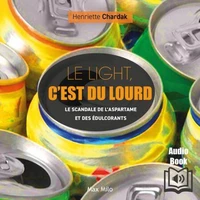
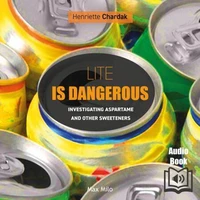
Lite is Dangerous. Investigating Aspartame and Other Sweeteners
Par :Formats :
Disponible dans votre compte client Decitre ou Furet du Nord dès validation de votre commande. Le format ePub protégé est :
- Compatible avec une lecture sur My Vivlio (smartphone, tablette, ordinateur)
- Compatible avec une lecture sur liseuses Vivlio
- Pour les liseuses autres que Vivlio, vous devez utiliser le logiciel Adobe Digital Edition. Non compatible avec la lecture sur les liseuses Kindle, Remarkable et Sony
- Non compatible avec un achat hors France métropolitaine
 , qui est-ce ?
Notre partenaire de plateforme de lecture numérique où vous retrouverez l'ensemble de vos ebooks gratuitement
Pour en savoir plus sur nos ebooks, consultez notre aide en ligne ici
C'est si simple ! Lisez votre ebook avec l'app Vivlio sur votre tablette, mobile ou ordinateur :

- Nombre de pages244
- FormatePub
- ISBN978-2-315-01165-0
- EAN9782315011650
- Date de parution04/07/2023
- Protection num.Adobe DRM
- Taille2 Mo
- Infos supplémentairesepub
- ÉditeurMax Milo
Résumé
In 6, 000 food products, aspartame is found everywhere in so-called diet nutrition. However, several scientific studies show that this sweetener is harmful for children, pregnant women and epileptics. Used to replace sugar and reduce the caloric intake of food, aspartame actually works in the opposite direction, it develops obesity and diabetes.
In this first in-depth investigation of the diet industry, Henriette Chardak exposes a health scandal.
She shows why the use of aspartame continues despite the risks it generates. How people were pushed into consuming these chemical substances-whose harmlessness had been questioned for many years. Between Chicago and Tokyo, top-secret files and complacency of the authorities, the author offers us a breathless thriller, behind-the-scenes of the world chemical industry. The story begins in Chicago and ends up in our plates and our medicines.
A real cold case, where readers will find the keys to a thriller that was played out in the 1970s. They will make up their minds about the usefulness-or danger-of this fake sugar. Two scoops: .super sweeteners from aspartame are given to cattle to make them grow fatter faster; .Japan, which manufactures aspartame, does not consume it. This book also lays bare what is was not meant to be told-the conflicts of interest, colossal stakes, secret files forbidden to the public. Henriette Chardak is a journalist and television producer.
She studied criminology with Professor Jacques Léauté during her journalism studies, which led her to prefer long investigations to short news flashes. After working as a journalist and director for France 2, she devoted herself to biographies, to introduce the general public to unique and exemplary pioneers: Kepler, Brahe, Pythagoras, Rabelais, Cervantes, Reclus, Shakespeare.
She shows why the use of aspartame continues despite the risks it generates. How people were pushed into consuming these chemical substances-whose harmlessness had been questioned for many years. Between Chicago and Tokyo, top-secret files and complacency of the authorities, the author offers us a breathless thriller, behind-the-scenes of the world chemical industry. The story begins in Chicago and ends up in our plates and our medicines.
A real cold case, where readers will find the keys to a thriller that was played out in the 1970s. They will make up their minds about the usefulness-or danger-of this fake sugar. Two scoops: .super sweeteners from aspartame are given to cattle to make them grow fatter faster; .Japan, which manufactures aspartame, does not consume it. This book also lays bare what is was not meant to be told-the conflicts of interest, colossal stakes, secret files forbidden to the public. Henriette Chardak is a journalist and television producer.
She studied criminology with Professor Jacques Léauté during her journalism studies, which led her to prefer long investigations to short news flashes. After working as a journalist and director for France 2, she devoted herself to biographies, to introduce the general public to unique and exemplary pioneers: Kepler, Brahe, Pythagoras, Rabelais, Cervantes, Reclus, Shakespeare.
A propos de Henriette Chardak
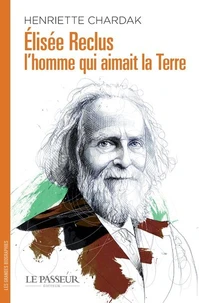
Elisée Reclus, l'homme qui aimait la Terre
Grand Format
17,00 €
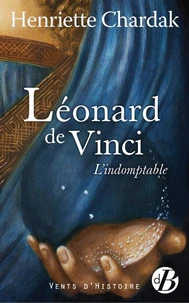
Léonard de Vinci. L'indomptable - Occasion
Grand Format
13,48 €

Le songe de Baho la chamane - Occasion
Grand Format
10,97 €
Tahül et les pierres de foudre - Occasion
Grand Format
11,54 €
Andreas Vesalius. Chirurgien des rois - Occasion
Grand Format
12,38 €
6,71 €

Aiguillages mortels
E-book
20,99 €
13,99 €
13,99 €
13,99 €
4,99 €