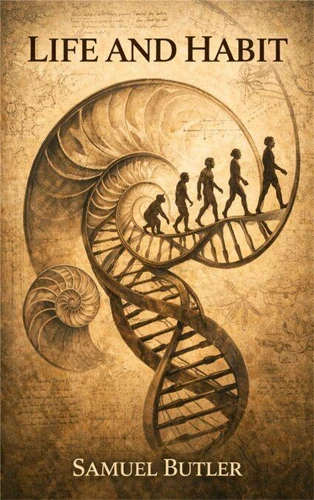
Life and Habit
Par :Formats :
Disponible dans votre compte client Decitre ou Furet du Nord dès validation de votre commande. Le format ePub est :
- Compatible avec une lecture sur My Vivlio (smartphone, tablette, ordinateur)
- Compatible avec une lecture sur liseuses Vivlio
- Pour les liseuses autres que Vivlio, vous devez utiliser le logiciel Adobe Digital Edition. Non compatible avec la lecture sur les liseuses Kindle, Remarkable et Sony
 , qui est-ce ?
Notre partenaire de plateforme de lecture numérique où vous retrouverez l'ensemble de vos ebooks gratuitement
Pour en savoir plus sur nos ebooks, consultez notre aide en ligne ici
C'est si simple ! Lisez votre ebook avec l'app Vivlio sur votre tablette, mobile ou ordinateur :

- Nombre de pages303
- FormatePub
- ISBN978-625-387-580-0
- EAN9786253875800
- Date de parution26/03/2026
- Protection num.Digital Watermarking
- Taille4 Mo
- Infos supplémentairesepub
- ÉditeurE-Kitap Projesi & Cheapest Boo
Résumé
Since Samuel Butler published "Life and Habit" thirty-three [vii] years have elapsed-years fruitful in change and discovery, during which many of the mighty have been put down from their seat and many of the humble have been exalted. I do not know that Butler can truthfully be called humble, indeed, I think he had very few misgivings as to his ultimate triumph, but he has certainly been exalted with a rapidity that he himself can scarcely have foreseen.
During his lifetime he was a literary pariah, the victim of an orga-nized conspiracy of silence. He is now, I think it may be said without exaggeration, universally accepted as one of the most remarkable English writers of the latter part of the nineteenth century. I will not weary my readers by quoting the numerous tributes paid by distinguished contemporary writers to Butler's originality and force of mind, but I cannot refrain from illustrating the changed attitude of the sci-entific world to Butler and his theories by a reference to "Darwin and Modern Science, " the collection of essays published in 1909 by the University of Cambridge, in commemoration of the Darwin centenary.
During his lifetime he was a literary pariah, the victim of an orga-nized conspiracy of silence. He is now, I think it may be said without exaggeration, universally accepted as one of the most remarkable English writers of the latter part of the nineteenth century. I will not weary my readers by quoting the numerous tributes paid by distinguished contemporary writers to Butler's originality and force of mind, but I cannot refrain from illustrating the changed attitude of the sci-entific world to Butler and his theories by a reference to "Darwin and Modern Science, " the collection of essays published in 1909 by the University of Cambridge, in commemoration of the Darwin centenary.
A propos de Samuel Butler

The Iliad & The Odyssey
E-book
0,99 €

The Epic Poems Anthology
E-book
0,99 €

Erewhon Revisited
E-book
0,49 €