SOLDES
Jusqu'à -70% sur une sélection d'articles*

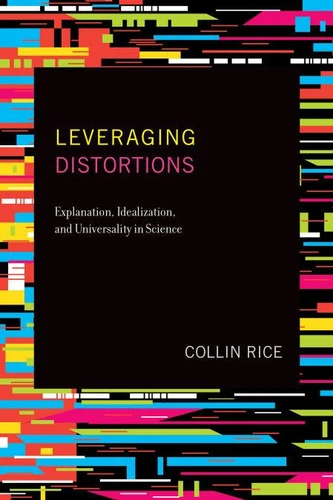
Leveraging Distortions. Explanation, Idealization, and Universality in Science
Par :Formats :
Disponible dans votre compte client Decitre ou Furet du Nord dès validation de votre commande. Le format ePub protégé est :
- Compatible avec une lecture sur My Vivlio (smartphone, tablette, ordinateur)
- Compatible avec une lecture sur liseuses Vivlio
- Pour les liseuses autres que Vivlio, vous devez utiliser le logiciel Adobe Digital Edition. Non compatible avec la lecture sur les liseuses Kindle, Remarkable et Sony
- Non compatible avec un achat hors France métropolitaine
 , qui est-ce ?
Notre partenaire de plateforme de lecture numérique où vous retrouverez l'ensemble de vos ebooks gratuitement
Pour en savoir plus sur nos ebooks, consultez notre aide en ligne ici
C'est si simple ! Lisez votre ebook avec l'app Vivlio sur votre tablette, mobile ou ordinateur :

- Nombre de pages366
- FormatePub
- ISBN978-0-262-36583-3
- EAN9780262365833
- Date de parution17/08/2021
- Protection num.Adobe DRM
- Taille8 Mo
- Infos supplémentairesepub
- ÉditeurThe MIT Press
Résumé
An examination of how scientists deliberately and justifiably use pervasive distortions of relevant features to explain and understand natural phenomena. A fundamental rule of logic is that in order for an argument to provide good reasons for its conclusion, the premises of the argument must be true. In this book, Collin Rice shows how the practice of science repeatedly, pervasively, and deliberately violates this principle.
Rice argues that scientists strategically use distortions that misrepresent relevant features of natural phenomena in order to explain and understand--and that they use these distortions deliberately and justifiably in order to discover truths that would be otherwise inaccessible. Countering the standard emphasis on causation, accurate representation, and decomposition of science into its accurate and inaccurate parts, Rice shows that science's epistemic achievements can still be factive despite their being produced through the use of holistically distorted scientific representations.
Indeed, he argues, this distortion is one of the most widely employed and fruitful tools used in scientific theorizing. Marshalling a range of case studies, Rice contends that many explanations in science are noncausal, and he presents an alternate view of explanation that captures the variety of noncausal explanations found across the sciences. He proposes an alternative holistic distortion view of idealized models, connecting it to physicists' concept of a universality class; shows how universality classes can overcome some of the challenges of multiscale modeling; and offers accounts of explanation, idealization, modeling, and understanding.
Rice argues that scientists strategically use distortions that misrepresent relevant features of natural phenomena in order to explain and understand--and that they use these distortions deliberately and justifiably in order to discover truths that would be otherwise inaccessible. Countering the standard emphasis on causation, accurate representation, and decomposition of science into its accurate and inaccurate parts, Rice shows that science's epistemic achievements can still be factive despite their being produced through the use of holistically distorted scientific representations.
Indeed, he argues, this distortion is one of the most widely employed and fruitful tools used in scientific theorizing. Marshalling a range of case studies, Rice contends that many explanations in science are noncausal, and he presents an alternate view of explanation that captures the variety of noncausal explanations found across the sciences. He proposes an alternative holistic distortion view of idealized models, connecting it to physicists' concept of a universality class; shows how universality classes can overcome some of the challenges of multiscale modeling; and offers accounts of explanation, idealization, modeling, and understanding.