
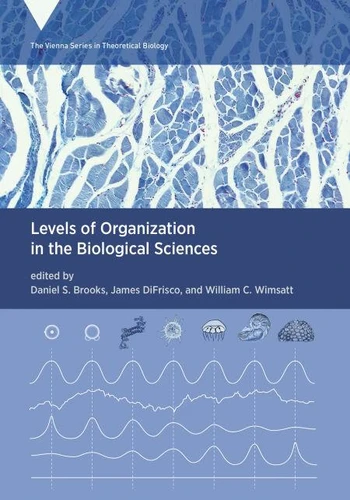
Levels of Organization in the Biological Sciences
Par : , ,Formats :
Disponible dans votre compte client Decitre ou Furet du Nord dès validation de votre commande. Le format ePub protégé est :
- Compatible avec une lecture sur My Vivlio (smartphone, tablette, ordinateur)
- Compatible avec une lecture sur liseuses Vivlio
- Pour les liseuses autres que Vivlio, vous devez utiliser le logiciel Adobe Digital Edition. Non compatible avec la lecture sur les liseuses Kindle, Remarkable et Sony
- Non compatible avec un achat hors France métropolitaine
 , qui est-ce ?
Notre partenaire de plateforme de lecture numérique où vous retrouverez l'ensemble de vos ebooks gratuitement
Pour en savoir plus sur nos ebooks, consultez notre aide en ligne ici
C'est si simple ! Lisez votre ebook avec l'app Vivlio sur votre tablette, mobile ou ordinateur :

- Nombre de pages336
- FormatePub
- ISBN978-0-262-36225-2
- EAN9780262362252
- Date de parution24/08/2021
- Protection num.Adobe DRM
- Taille21 Mo
- Infos supplémentairesepub
- ÉditeurThe MIT Press
Résumé
Scientific philosophers examine the nature and significance of levels of organization, a core structural principle in the biological sciences. This volume examines the idea of levels of organization as a distinct object of investigation, considering its merits as a core organizational principle for the scientific image of the natural world. It approaches levels of organization--roughly, the idea that the natural world is segregated into part-whole relationships of increasing spatiotemporal scale and complexity--in terms of its roles in scientific reasoning as a dynamic, open-ended idea capable of performing multiple overlapping functions in distinct empirical settings.
The contributors--scientific philosophers with longstanding ties to the biological sciences--discuss topics including the philosophical and scientific contexts for an inquiry into levels; whether the concept can actually deliver on its organizational promises; the role of levels in the development and evolution of complex systems; conditional independence and downward causation; and the extension of the concept into the sociocultural realm.
Taken together, the contributions embrace the diverse usages of the term as aspects of the big picture of levels of organization. ContributorsJan Baedke, Robert W. Batterman, Daniel S. Brooks, James DiFrisco, Markus I. Eronen, Carl Gillett, Sara Green, James Griesemer, Alan C. Love, Angela Potochnik, Thomas Reydon, Ilya Tëmkin, Jon Umerez, William C. Wimsatt, James Woodward
The contributors--scientific philosophers with longstanding ties to the biological sciences--discuss topics including the philosophical and scientific contexts for an inquiry into levels; whether the concept can actually deliver on its organizational promises; the role of levels in the development and evolution of complex systems; conditional independence and downward causation; and the extension of the concept into the sociocultural realm.
Taken together, the contributions embrace the diverse usages of the term as aspects of the big picture of levels of organization. ContributorsJan Baedke, Robert W. Batterman, Daniel S. Brooks, James DiFrisco, Markus I. Eronen, Carl Gillett, Sara Green, James Griesemer, Alan C. Love, Angela Potochnik, Thomas Reydon, Ilya Tëmkin, Jon Umerez, William C. Wimsatt, James Woodward