SOLDES
Jusqu'à -70% sur une sélection d'articles*

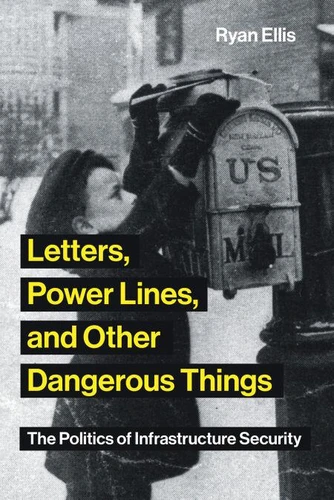
Letters, Power Lines, and Other Dangerous Things. The Politics of Infrastructure Security
Par :Formats :
Disponible dans votre compte client Decitre ou Furet du Nord dès validation de votre commande. Le format ePub protégé est :
- Compatible avec une lecture sur My Vivlio (smartphone, tablette, ordinateur)
- Compatible avec une lecture sur liseuses Vivlio
- Pour les liseuses autres que Vivlio, vous devez utiliser le logiciel Adobe Digital Edition. Non compatible avec la lecture sur les liseuses Kindle, Remarkable et Sony
- Non compatible avec un achat hors France métropolitaine
 , qui est-ce ?
Notre partenaire de plateforme de lecture numérique où vous retrouverez l'ensemble de vos ebooks gratuitement
Pour en savoir plus sur nos ebooks, consultez notre aide en ligne ici
C'est si simple ! Lisez votre ebook avec l'app Vivlio sur votre tablette, mobile ou ordinateur :

- Nombre de pages384
- FormatePub
- ISBN978-0-262-35778-4
- EAN9780262357784
- Date de parution03/03/2020
- Protection num.Adobe DRM
- Taille12 Mo
- Infos supplémentairesepub
- ÉditeurThe MIT Press
Résumé
An examination of how post-9/11 security concerns have transformed the public view and governance of infrastructure. After September 11, 2001, infrastructures-the mundane systems that undergird much of modern life-were suddenly considered "soft targets" that required immediate security enhancements. Infrastructure protection quickly became the multibillion dollar core of a new and expansive homeland security mission.
In this book, Ryan Ellis examines how the long shadow of post-9/11 security concerns have remade and reordered infrastructure, arguing that it has been a stunning transformation. Ellis describes the way workers, civic groups, city councils, bureaucrats, and others used the threat of terrorism as a political resource, taking the opportunity not only to address security vulnerabilities but also to reassert a degree of public control over infrastructure.
Nearly two decades after September 11, the threat of terrorism remains etched into the inner workings of infrastructures through new laws, regulations, technologies, and practices. Ellis maps these changes through an examination of three U. S. infrastructures: the postal system, the freight rail network, and the electric power grid. He describes, for example, how debates about protecting the mail from anthrax and other biological hazards spiraled into larger arguments over worker rights, the power of large-volume mailers, and the fortunes of old media in a new media world; how environmental activists leveraged post-9/11 security fears over shipments of hazardous materials to take on the rail industry and the chemical lobby; and how otherwise marginal federal regulators parlayed new mandatory cybersecurity standards for the electric power industry into a robust system of accountability.
In this book, Ryan Ellis examines how the long shadow of post-9/11 security concerns have remade and reordered infrastructure, arguing that it has been a stunning transformation. Ellis describes the way workers, civic groups, city councils, bureaucrats, and others used the threat of terrorism as a political resource, taking the opportunity not only to address security vulnerabilities but also to reassert a degree of public control over infrastructure.
Nearly two decades after September 11, the threat of terrorism remains etched into the inner workings of infrastructures through new laws, regulations, technologies, and practices. Ellis maps these changes through an examination of three U. S. infrastructures: the postal system, the freight rail network, and the electric power grid. He describes, for example, how debates about protecting the mail from anthrax and other biological hazards spiraled into larger arguments over worker rights, the power of large-volume mailers, and the fortunes of old media in a new media world; how environmental activists leveraged post-9/11 security fears over shipments of hazardous materials to take on the rail industry and the chemical lobby; and how otherwise marginal federal regulators parlayed new mandatory cybersecurity standards for the electric power industry into a robust system of accountability.