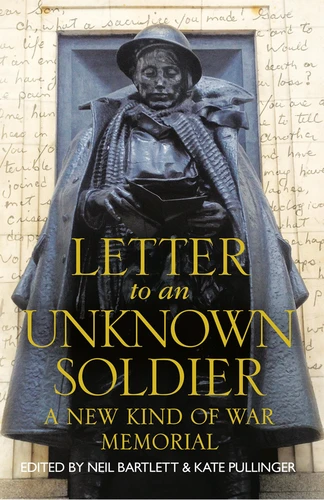
Letter To An Unknown Soldier. A New Kind of War Memorial
Par : ,Formats :
Disponible dans votre compte client Decitre ou Furet du Nord dès validation de votre commande. Le format ePub protégé est :
- Compatible avec une lecture sur My Vivlio (smartphone, tablette, ordinateur)
- Compatible avec une lecture sur liseuses Vivlio
- Pour les liseuses autres que Vivlio, vous devez utiliser le logiciel Adobe Digital Edition. Non compatible avec la lecture sur les liseuses Kindle, Remarkable et Sony
- Non compatible avec un achat hors France métropolitaine
 , qui est-ce ?
Notre partenaire de plateforme de lecture numérique où vous retrouverez l'ensemble de vos ebooks gratuitement
Pour en savoir plus sur nos ebooks, consultez notre aide en ligne ici
C'est si simple ! Lisez votre ebook avec l'app Vivlio sur votre tablette, mobile ou ordinateur :

- Nombre de pages256
- FormatePub
- ISBN978-0-00-811685-9
- EAN9780008116859
- Date de parution06/11/2014
- Protection num.Adobe DRM
- Infos supplémentairesepub
- ÉditeurWilliam Collins
Résumé
On Platform One of Paddington Station in London, there is a statue of an unknown soldier; he's reading a letter. On the hundredth anniversary of the declaration of war everyone in the country was invited to take a moment and write that letter. A selection of those letters are published here, in a new kind of war memorial - one made only of words.
In a year of public commemoration 'Letter to an Unknown Soldier' invited everyone to step back from the public ceremonies and take a few private moments to think.
Providing a space for people to reconsider the familiar imagery we associate with the war memorials - cenotaphs, poppies, and silence - it asked the following questions: if you could say what you want to say about that war, with all we've learned since 1914, with all your own experience of life and death to hand, what would you say? If you were able to send a personal message to this soldier, a man who served and was killed during World War One, what would you write? The response was extraordinary.
The invitation was to everyone and, indeed, all sorts of people responded: schoolchildren, pensioners, students, artists, nurses, serving members of the forces and even the Prime Minister. Letters arrived from all over the United Kingdom and beyond, and many well-known writers and personalities contributed. Opening on 28th June 2014, the centenary of the Sarajevo assassinations, and closing at 11 pm on the night of 4 August 2014, the centenary of the moment when Prime Minister Asquith announced to the House of Commons that Britain had joined the First World War, this book offers a snapshot of what people in this country and across the world were thinking and feeling about the centenary of World War One.
Providing a space for people to reconsider the familiar imagery we associate with the war memorials - cenotaphs, poppies, and silence - it asked the following questions: if you could say what you want to say about that war, with all we've learned since 1914, with all your own experience of life and death to hand, what would you say? If you were able to send a personal message to this soldier, a man who served and was killed during World War One, what would you write? The response was extraordinary.
The invitation was to everyone and, indeed, all sorts of people responded: schoolchildren, pensioners, students, artists, nurses, serving members of the forces and even the Prime Minister. Letters arrived from all over the United Kingdom and beyond, and many well-known writers and personalities contributed. Opening on 28th June 2014, the centenary of the Sarajevo assassinations, and closing at 11 pm on the night of 4 August 2014, the centenary of the moment when Prime Minister Asquith announced to the House of Commons that Britain had joined the First World War, this book offers a snapshot of what people in this country and across the world were thinking and feeling about the centenary of World War One.