Over the past fifty years, Canada's Indigenous Affairs department (now two departments with more than 30 federal co-delivery partners) has mushroomed into a "super-province" delivering birth-to-death programs and services to First Nations, Inuit and Métis people. This vast entity has jurisdictional reach over 90 percent of Canada's landscape, and an annual budget of some $20 billion. Yet Indigenous people have no means to hold this "super-province" accountable to them.
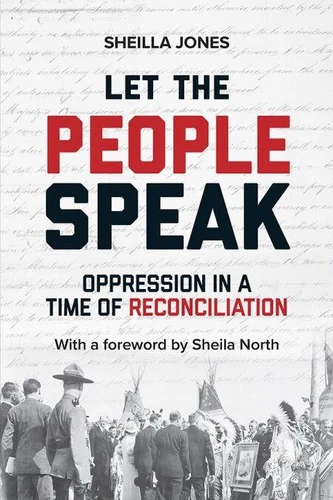
Not a single person in this entity has been elected by Indigenous people to represent their interests. Not one. When it comes to federal Indigenous policy, ordinary Indigenous people in Canada are voiceless and powerless. In Let the People Speak: Oppression in a time of reconciliation, author and journalist Sheilla Jones raises an important question: are the well-documented social inequities in Indigenous communities-high levels of poverty, suicide, incarceration, children in care, family violence-the symptoms of this long-standing, institutionalized powerlessness? If so, the solution lies in empowerment.
And the means of empowerment is already embedded in the historic treaties. Jones argues that there can be meaningful reconciliation only when ordinary Indigenous Canadians are finally empowered to make their voices heard, and ordinary non-Indigenous Canadians can join with them to advance a shared future.
Over the past fifty years, Canada's Indigenous Affairs department (now two departments with more than 30 federal co-delivery partners) has mushroomed into a "super-province" delivering birth-to-death programs and services to First Nations, Inuit and Métis people. This vast entity has jurisdictional reach over 90 percent of Canada's landscape, and an annual budget of some $20 billion. Yet Indigenous people have no means to hold this "super-province" accountable to them.
Not a single person in this entity has been elected by Indigenous people to represent their interests. Not one. When it comes to federal Indigenous policy, ordinary Indigenous people in Canada are voiceless and powerless. In Let the People Speak: Oppression in a time of reconciliation, author and journalist Sheilla Jones raises an important question: are the well-documented social inequities in Indigenous communities-high levels of poverty, suicide, incarceration, children in care, family violence-the symptoms of this long-standing, institutionalized powerlessness? If so, the solution lies in empowerment.
And the means of empowerment is already embedded in the historic treaties. Jones argues that there can be meaningful reconciliation only when ordinary Indigenous Canadians are finally empowered to make their voices heard, and ordinary non-Indigenous Canadians can join with them to advance a shared future.