SOLDES
Jusqu'à -70% sur une sélection d'articles*

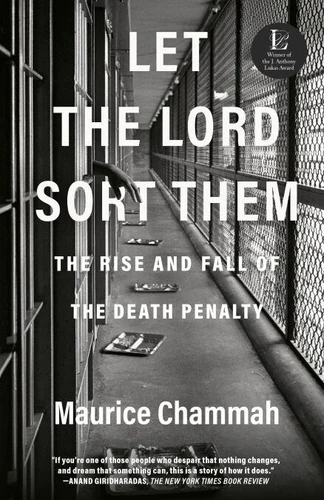
Let the Lord Sort Them. The Rise and Fall of the Death Penalty
Par :Formats :
Disponible dans votre compte client Decitre ou Furet du Nord dès validation de votre commande. Le format ePub protégé est :
- Compatible avec une lecture sur My Vivlio (smartphone, tablette, ordinateur)
- Compatible avec une lecture sur liseuses Vivlio
- Pour les liseuses autres que Vivlio, vous devez utiliser le logiciel Adobe Digital Edition. Non compatible avec la lecture sur les liseuses Kindle, Remarkable et Sony
- Non compatible avec un achat hors France métropolitaine
 , qui est-ce ?
Notre partenaire de plateforme de lecture numérique où vous retrouverez l'ensemble de vos ebooks gratuitement
Pour en savoir plus sur nos ebooks, consultez notre aide en ligne ici
C'est si simple ! Lisez votre ebook avec l'app Vivlio sur votre tablette, mobile ou ordinateur :

- Nombre de pages368
- FormatePub
- ISBN978-1-5247-6027-4
- EAN9781524760274
- Date de parution26/01/2021
- Protection num.Adobe DRM
- Taille2 Mo
- Infos supplémentairesepub
- ÉditeurCrown
Résumé
NEW YORK TIMES EDITORS' CHOICE . A deeply reported, searingly honest portrait of the death penalty in Texas-and what it tells us about crime and punishment in America"If you're one of those people who despair that nothing changes, and dream that something can, this is a story of how it does."-Anand Giridharadas, The New York Times Book ReviewWINNER OF THE J. ANTHONY LUKAS AWARDIn 1972, the United States Supreme Court made a surprising ruling: the country's death penalty system violated the Constitution.
The backlash was swift, especially in Texas, where executions were considered part of the cultural fabric, and a dark history of lynching was masked by gauzy visions of a tough-on-crime frontier. When executions resumed, Texas quickly became the nationwide leader in carrying out the punishment. Then, amid a larger wave of criminal justice reform, came the death penalty's decline, a trend so durable that even in Texas the punishment appears again close to extinction.
In Let the Lord Sort Them, Maurice Chammah charts the rise and fall of capital punishment through the eyes of those it touched. We meet Elsa Alcala, the orphaned daughter of a Mexican American family who found her calling as a prosecutor in the nation's death penalty capital, before becoming a judge on the state's highest court. We meet Danalynn Recer, a lawyer who became obsessively devoted to unearthing the life stories of men who committed terrible crimes, and fought for mercy in courtrooms across the state.
We meet death row prisoners-many of them once-famous figures like Henry Lee Lucas, Gary Graham, and Karla Faye Tucker-along with their families and the families of their victims. And we meet the executioners, who struggle openly with what society has asked them to do. In tracing these interconnected lives against the rise of mass incarceration in Texas and the country as a whole, Chammah explores what the persistence of the death penalty tells us about forgiveness and retribution, fairness and justice, history and myth.
Written with intimacy and grace, Let the Lord Sort Them is the definitive portrait of a particularly American institution.
The backlash was swift, especially in Texas, where executions were considered part of the cultural fabric, and a dark history of lynching was masked by gauzy visions of a tough-on-crime frontier. When executions resumed, Texas quickly became the nationwide leader in carrying out the punishment. Then, amid a larger wave of criminal justice reform, came the death penalty's decline, a trend so durable that even in Texas the punishment appears again close to extinction.
In Let the Lord Sort Them, Maurice Chammah charts the rise and fall of capital punishment through the eyes of those it touched. We meet Elsa Alcala, the orphaned daughter of a Mexican American family who found her calling as a prosecutor in the nation's death penalty capital, before becoming a judge on the state's highest court. We meet Danalynn Recer, a lawyer who became obsessively devoted to unearthing the life stories of men who committed terrible crimes, and fought for mercy in courtrooms across the state.
We meet death row prisoners-many of them once-famous figures like Henry Lee Lucas, Gary Graham, and Karla Faye Tucker-along with their families and the families of their victims. And we meet the executioners, who struggle openly with what society has asked them to do. In tracing these interconnected lives against the rise of mass incarceration in Texas and the country as a whole, Chammah explores what the persistence of the death penalty tells us about forgiveness and retribution, fairness and justice, history and myth.
Written with intimacy and grace, Let the Lord Sort Them is the definitive portrait of a particularly American institution.