
Edward W. Glowienka is Assistant Professor of Philosophy at Carroll College in Helena, Montana. His research focuses on metaphysics and ethics in the early modern period, particularly in the work of G. W. Leibniz.
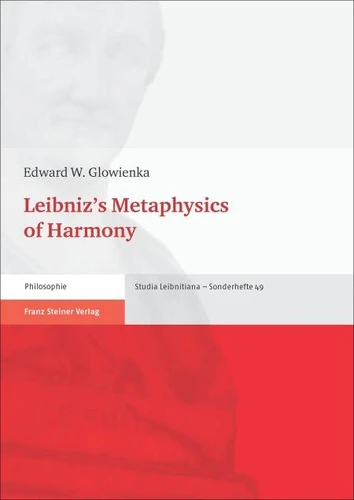
Leibniz's Metaphysics of Harmony
Par :Formats :
Disponible dans votre compte client Decitre ou Furet du Nord dès validation de votre commande. Le format PDF est :
- Compatible avec une lecture sur My Vivlio (smartphone, tablette, ordinateur)
- Compatible avec une lecture sur liseuses Vivlio
- Pour les liseuses autres que Vivlio, vous devez utiliser le logiciel Adobe Digital Edition. Non compatible avec la lecture sur les liseuses Kindle, Remarkable et Sony
 , qui est-ce ?
Notre partenaire de plateforme de lecture numérique où vous retrouverez l'ensemble de vos ebooks gratuitement
Pour en savoir plus sur nos ebooks, consultez notre aide en ligne ici
C'est si simple ! Lisez votre ebook avec l'app Vivlio sur votre tablette, mobile ou ordinateur :

- Nombre de pages124
- FormatPDF
- ISBN978-3-515-11483-7
- EAN9783515114837
- Date de parution07/10/2016
- Protection num.Digital Watermarking
- Taille2 Mo
- Infos supplémentairespdf
- ÉditeurFranz Steiner
Résumé
Central to G. W. Leibniz's (1646-1716) contention that we live in "the best of all possible worlds" is the thesis that we inhabit a harmoniously ordered universe. However, despite Leibniz's numerous remarks on the matter, no consensus exists on what exactly universal harmony entails. This e-book examines Leibniz's writings chronologically and offers a new assessment of the meaning and function of harmony in Leibniz's metaphysics.
The author shows that Leibniz's conception of harmony undergoes significant revision in the 1670s. He maintains that understanding this revision is crucial for grasping how Leibniz employs the idea of harmony in arguments for the mind's incorporeal nature and its "preestablished harmony" with the body, as well in arguments for the world's intelligibility and for the privileged moral status of rational agents.
The e-book thus aims to broaden our picture of the development of Leibniz's philosophy and to deepen our appreciation for the irreducible role harmony plays in it.
The author shows that Leibniz's conception of harmony undergoes significant revision in the 1670s. He maintains that understanding this revision is crucial for grasping how Leibniz employs the idea of harmony in arguments for the mind's incorporeal nature and its "preestablished harmony" with the body, as well in arguments for the world's intelligibility and for the privileged moral status of rational agents.
The e-book thus aims to broaden our picture of the development of Leibniz's philosophy and to deepen our appreciation for the irreducible role harmony plays in it.