SOLDES
Jusqu'à -70% sur une sélection d'articles*

Nouveauté
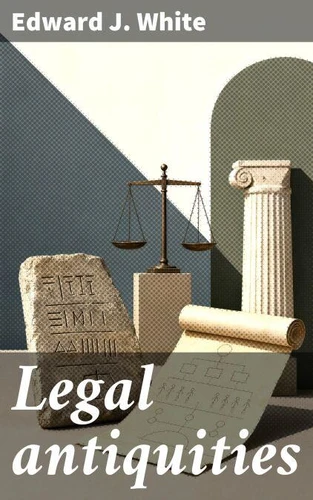
Legal antiquities. A collection of essays upon ancient laws and customs
Par :Formats :
Disponible dans votre compte client Decitre ou Furet du Nord dès validation de votre commande. Le format ePub est :
- Compatible avec une lecture sur My Vivlio (smartphone, tablette, ordinateur)
- Compatible avec une lecture sur liseuses Vivlio
- Pour les liseuses autres que Vivlio, vous devez utiliser le logiciel Adobe Digital Edition. Non compatible avec la lecture sur les liseuses Kindle, Remarkable et Sony
 , qui est-ce ?
Notre partenaire de plateforme de lecture numérique où vous retrouverez l'ensemble de vos ebooks gratuitement
Pour en savoir plus sur nos ebooks, consultez notre aide en ligne ici
C'est si simple ! Lisez votre ebook avec l'app Vivlio sur votre tablette, mobile ou ordinateur :

- Nombre de pages269
- FormatePub
- ISBN859-65--4790382-6
- EAN8596547903826
- Date de parution29/06/2026
- Protection num.Digital Watermarking
- Taille705 Ko
- Infos supplémentairesepub
- ÉditeurGOOD PRESS
Résumé
Edward J. White's Legal antiquities is a learned exploration of the historical foundations of law, tracing the origins, customs, institutions, and procedural forms that shaped early legal systems. Written in a scholarly yet accessible style, the book belongs to the antiquarian tradition of legal history, where close attention to ancient statutes, precedents, and usages illuminates the gradual formation of jurisprudence.
White's method is careful and descriptive, situating legal practice within broader historical development and revealing how inherited forms continued to influence later legal thought. Though less widely known today, Edward J. White emerges from a tradition of writers devoted to preserving and interpreting the deep past of legal culture. His interest in legal antiquity reflects a period when scholars and practitioners alike sought legitimacy and clarity in the historical roots of institutions.
Such a work likely grew from White's engagement with historical records and from the nineteenth-century conviction that the study of origins was indispensable to understanding the modern law. This book is especially recommended to readers of legal history, antiquarian scholarship, and the evolution of institutions. It rewards patient attention with a richer sense of how law develops over centuries, making it valuable not only for specialists but also for thoughtful general readers interested in the intellectual ancestry of justice.
White's method is careful and descriptive, situating legal practice within broader historical development and revealing how inherited forms continued to influence later legal thought. Though less widely known today, Edward J. White emerges from a tradition of writers devoted to preserving and interpreting the deep past of legal culture. His interest in legal antiquity reflects a period when scholars and practitioners alike sought legitimacy and clarity in the historical roots of institutions.
Such a work likely grew from White's engagement with historical records and from the nineteenth-century conviction that the study of origins was indispensable to understanding the modern law. This book is especially recommended to readers of legal history, antiquarian scholarship, and the evolution of institutions. It rewards patient attention with a richer sense of how law develops over centuries, making it valuable not only for specialists but also for thoughtful general readers interested in the intellectual ancestry of justice.