SOLDES
Jusqu'à -70% sur une sélection d'articles*

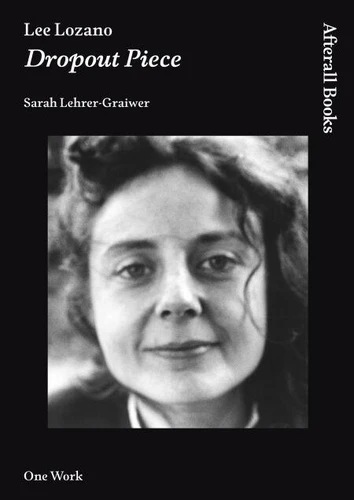
Lee Lozano. Dropout Piece
Par :Formats :
Disponible dans votre compte client Decitre ou Furet du Nord dès validation de votre commande. Le format ePub protégé est :
- Compatible avec une lecture sur My Vivlio (smartphone, tablette, ordinateur)
- Compatible avec une lecture sur liseuses Vivlio
- Pour les liseuses autres que Vivlio, vous devez utiliser le logiciel Adobe Digital Edition. Non compatible avec la lecture sur les liseuses Kindle, Remarkable et Sony
- Non compatible avec un achat hors France métropolitaine
 , qui est-ce ?
Notre partenaire de plateforme de lecture numérique où vous retrouverez l'ensemble de vos ebooks gratuitement
Pour en savoir plus sur nos ebooks, consultez notre aide en ligne ici
C'est si simple ! Lisez votre ebook avec l'app Vivlio sur votre tablette, mobile ou ordinateur :

- Nombre de pages120
- FormatePub
- ISBN978-1-84638-136-2
- EAN9781846381362
- Date de parution28/02/2014
- Protection num.Adobe DRM
- Taille9 Mo
- Infos supplémentairesepub
- ÉditeurAfterall Books
Résumé
An examination of Lee Lozano's greatest experiment in art and endurance-a major work of art that might not exist at all. The artist Lee Lozano (1930-1999) began her career as a painter; her work rapidly evolved from figuration to abstraction. In the late 1960s, she created a major series of eleven monochromatic Wave paintings, her last in the medium. Despite her achievements as a painter, Lozano is best known for two acts of refusal, both of which she undertook as artworks: Untitled (General Strike Piece), begun in 1969, in which she cut herself off from the commercial art world for a time; and the so-called Boycott Piece, which began in 1971 as a month-long experiment intended to improve communication but became a permanent hiatus from speaking to or directly interacting with women.
In this book, Sarah Lehrer-Graiwer examines Lozano's Dropout Piece, the culmination of her practice, her greatest experiment in art and endurance, encompassing all her withdrawals, and ending only with her burial in an unmarked grave. And yet, although Dropout Piece is among Lozano's most important works, it might not exist at all. There is no conventional artwork to be exhibited, no performance event to be documented.
Lehrer-Graiwer views Dropout Piece as leveraging the artist's entire practice and embodying her creative intelligence, her radicality, and her intensity. Combining art history, analytical inquiry, and journalistic investigation, Lehrer-Graiwer examines not only Lozano's act of dropping out but also the evolution over time of Dropout Piece in the context of the artist's practice in New York and her subsequent life in Dallas.
In this book, Sarah Lehrer-Graiwer examines Lozano's Dropout Piece, the culmination of her practice, her greatest experiment in art and endurance, encompassing all her withdrawals, and ending only with her burial in an unmarked grave. And yet, although Dropout Piece is among Lozano's most important works, it might not exist at all. There is no conventional artwork to be exhibited, no performance event to be documented.
Lehrer-Graiwer views Dropout Piece as leveraging the artist's entire practice and embodying her creative intelligence, her radicality, and her intensity. Combining art history, analytical inquiry, and journalistic investigation, Lehrer-Graiwer examines not only Lozano's act of dropping out but also the evolution over time of Dropout Piece in the context of the artist's practice in New York and her subsequent life in Dallas.