SOLDES
Jusqu'à -70% sur une sélection d'articles*

Nouveauté
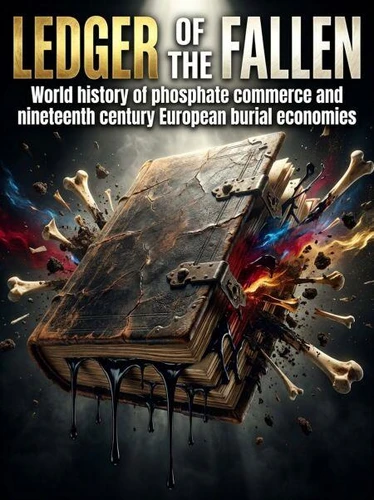
Ledger of the Fallen. World history of phosphate commerce and nineteenth century European burial economies
Par :Formats :
Disponible dans votre compte client Decitre ou Furet du Nord dès validation de votre commande. Le format ePub est :
- Compatible avec une lecture sur My Vivlio (smartphone, tablette, ordinateur)
- Compatible avec une lecture sur liseuses Vivlio
- Pour les liseuses autres que Vivlio, vous devez utiliser le logiciel Adobe Digital Edition. Non compatible avec la lecture sur les liseuses Kindle, Remarkable et Sony
 , qui est-ce ?
Notre partenaire de plateforme de lecture numérique où vous retrouverez l'ensemble de vos ebooks gratuitement
Pour en savoir plus sur nos ebooks, consultez notre aide en ligne ici
C'est si simple ! Lisez votre ebook avec l'app Vivlio sur votre tablette, mobile ou ordinateur :

- Nombre de pages173
- FormatePub
- ISBN978-3-565-46455-5
- EAN9783565464555
- Date de parution28/05/2026
- Protection num.pas de protection
- Taille967 Ko
- Infos supplémentairesepub
- ÉditeurEmphaloz Publishing House
Résumé
Long before synthetic fertilizers transformed global farming, European governments and private traders searched desperately for phosphates. Their solution emerged from battlefields, crypts, and forgotten graves. Millions of bones entered commercial circulation as nineteenth century agriculture demanded ever greater productivity.
The expansion of industrial farming in Britain created vast pressure on international supply chains.
Traders moved skeletal remains from Waterloo, Leipzig, and older burial sites into mills where bones became fertilizer for grain production. Customs archives and Victorian commodity records reveal how governments tolerated this trade through legal ambiguity and economic urgency. Agricultural reformers praised scientific efficiency while local communities confronted the disappearance of ancestral burial grounds.
The management of human remains became part of a larger administrative system linking ports, shipping firms, chemical manufacturers, and rural estates. Rather than focusing solely on battlefield memory, the narrative examines how modern bureaucracy converted death into inventory. Statistics, tariffs, and agricultural demand reduced human remains to measurable industrial material. The rise of commercial phosphate markets exposed a Europe increasingly governed through extraction, logistics, and economic rationalization. What emerged was not merely a fertilizer industry, but a continental reordering of moral boundaries during the age of industrial expansion.
Traders moved skeletal remains from Waterloo, Leipzig, and older burial sites into mills where bones became fertilizer for grain production. Customs archives and Victorian commodity records reveal how governments tolerated this trade through legal ambiguity and economic urgency. Agricultural reformers praised scientific efficiency while local communities confronted the disappearance of ancestral burial grounds.
The management of human remains became part of a larger administrative system linking ports, shipping firms, chemical manufacturers, and rural estates. Rather than focusing solely on battlefield memory, the narrative examines how modern bureaucracy converted death into inventory. Statistics, tariffs, and agricultural demand reduced human remains to measurable industrial material. The rise of commercial phosphate markets exposed a Europe increasingly governed through extraction, logistics, and economic rationalization. What emerged was not merely a fertilizer industry, but a continental reordering of moral boundaries during the age of industrial expansion.