
Katharina Danner ist Doktorandin am Institut für Bildungswissenschaft der Universität Wien.
Michael Duncan ist Doktorand am Institut für Soziologie der Universität Wien.
Jörg Flecker ist emeritierter Professor für Allgemeine Soziologie am Institut für Soziologie der Universität Wien und Leiter der Studie »Wege in die Zukunft« .
Paul Malschinger ist Doktorand am Institut für Soziologie der Universität Wien.
Veronika Wöhrer ist Professorin für Bildung und Ungleichheit am Institut für Bildungswissenschaft der Universität Wien und ist seit 2020 Co-Leiterin der Studie »Wege in die Zukunft« .
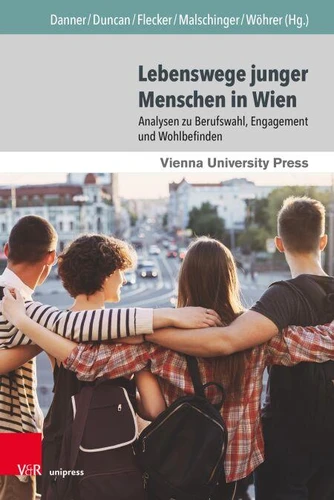
Lebenswege junger Menschen in Wien. Analysen zu Berufswahl, Engagement und Wohlbefinden
Par : , , , ,Formats :
Disponible dans votre compte client Decitre ou Furet du Nord dès validation de votre commande. Le format PDF est :
- Compatible avec une lecture sur My Vivlio (smartphone, tablette, ordinateur)
- Compatible avec une lecture sur liseuses Vivlio
- Pour les liseuses autres que Vivlio, vous devez utiliser le logiciel Adobe Digital Edition. Non compatible avec la lecture sur les liseuses Kindle, Remarkable et Sony
 , qui est-ce ?
Notre partenaire de plateforme de lecture numérique où vous retrouverez l'ensemble de vos ebooks gratuitement
Pour en savoir plus sur nos ebooks, consultez notre aide en ligne ici
C'est si simple ! Lisez votre ebook avec l'app Vivlio sur votre tablette, mobile ou ordinateur :

- Nombre de pages278
- FormatPDF
- ISBN978-3-8470-1907-7
- EAN9783847019077
- Date de parution10/11/2025
- Protection num.pas de protection
- Taille12 Mo
- Infos supplémentairespdf
- ÉditeurV&R Unipress
Résumé
Das Forschungsprojekt »Wege in die Zukunft« untersuchte über einen Zeitraum von fünf Jahren die Bildungs- und Lebensverläufe von Wiener Mittelschul-Absolvent:innen. Nach nur vier Jahren gemeinsamer Primarstufe unterscheidet das österreichische Schulsystem zwischen Mittelschule und gymnasialer Unterstufe. Besonders in urbanen Räumen sieht sich die Mittelschule häufig mit geringerer gesellschaftlicher Anerkennung konfrontiert.
Neben Analysen zu den Lebenswegen und -entscheidungen der Jugendlichen selbst stellte das Projekt daher auch die Frage nach der Relevanz sozialer Ungleichheit in ihren Lebensrealitäten. Die Beiträger:innen dieses dritten Projektbandes greifen diese Fragestellungen aus den Perspektiven der Bildungswissenschaft und der Soziologie auf und bedienen sich dabei sowohl qualitativer als auch quantitativer Forschungsmethoden. The research project "Pathways to the Future" examined the educational and life trajectories of Viennese "middle school" graduates over a period of five years.
After four years of common primary education, the Austrian school system distinguishes between the general track "middle school" ("Mittelschule") and the academic track "Gymnasium"; often leaving "middle schools" with less social recognition, especially in urban areas. In addition to analyzing the life paths and decisions of the adolescents themselves, the project also posed the question of the relevance of social inequality to their life realities from the very beginning.
The articles in this third volume address these questions from different disciplinary perspectives (educational science and sociology), using both qualitative and quantitative research methods. In addition, there are two project reports that provide examples of how research findings can be processed for young people and how the target group itself can be involved.
Neben Analysen zu den Lebenswegen und -entscheidungen der Jugendlichen selbst stellte das Projekt daher auch die Frage nach der Relevanz sozialer Ungleichheit in ihren Lebensrealitäten. Die Beiträger:innen dieses dritten Projektbandes greifen diese Fragestellungen aus den Perspektiven der Bildungswissenschaft und der Soziologie auf und bedienen sich dabei sowohl qualitativer als auch quantitativer Forschungsmethoden. The research project "Pathways to the Future" examined the educational and life trajectories of Viennese "middle school" graduates over a period of five years.
After four years of common primary education, the Austrian school system distinguishes between the general track "middle school" ("Mittelschule") and the academic track "Gymnasium"; often leaving "middle schools" with less social recognition, especially in urban areas. In addition to analyzing the life paths and decisions of the adolescents themselves, the project also posed the question of the relevance of social inequality to their life realities from the very beginning.
The articles in this third volume address these questions from different disciplinary perspectives (educational science and sociology), using both qualitative and quantitative research methods. In addition, there are two project reports that provide examples of how research findings can be processed for young people and how the target group itself can be involved.