
Richie is a data scientist with a background in chemical health and safety, and has worked extensively on tools to give non-technical users access to statistical models. He is the author of the R packages "assertive" for checking the state of your variables and "sig" to make sure your functions have a sensible API. He runs The Damned Liars statistics consultancy.
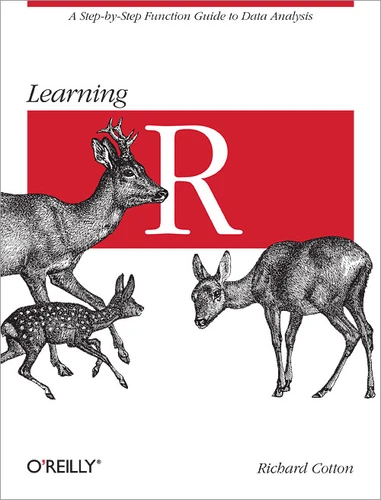
Learning R
Par :Formats :
Disponible dans votre compte client Decitre ou Furet du Nord dès validation de votre commande. Le format Multi-format est :
- Pour les liseuses autres que Vivlio, vous devez utiliser le logiciel Adobe Digital Edition. Non compatible avec la lecture sur les liseuses Kindle, Remarkable et Sony
 , qui est-ce ?
Notre partenaire de plateforme de lecture numérique où vous retrouverez l'ensemble de vos ebooks gratuitement
Pour en savoir plus sur nos ebooks, consultez notre aide en ligne ici
C'est si simple ! Lisez votre ebook avec l'app Vivlio sur votre tablette, mobile ou ordinateur :

- Nombre de pages400
- FormatMulti-format
- ISBN978-1-4493-5709-2
- EAN9781449357092
- Date de parution09/09/2013
- Protection num.NC
- Infos supplémentairesMulti-format incluant PDF sans p...
- ÉditeurO'Reilly Media
Résumé
Learn how to perform data analysis with the R language and software environment, even if you have little or no programming experience. With the tutorials in this hands-on guide, you'll learn how to use the essential R tools you need to know to analyze data, including data types and programming concepts.
The second half of Learning R shows you real data analysis in action by covering everything from importing data to publishing your results.
Each chapter in the book includes a quiz on what you've learned, and concludes with exercises, most of which involve writing R code. - Write a simple R program, and discover what the language can do - Use data types such as vectors, arrays, lists, data frames, and strings - Execute code conditionally or repeatedly with branches and loops - Apply R add-on packages, and package your own work for others - Learn how to clean data you import from a variety of sources - Understand data through visualization and summary statistics - Use statistical models to pass quantitative judgments about data and make predictions - Learn what to do when things go wrong while writing data analysis code
Each chapter in the book includes a quiz on what you've learned, and concludes with exercises, most of which involve writing R code. - Write a simple R program, and discover what the language can do - Use data types such as vectors, arrays, lists, data frames, and strings - Execute code conditionally or repeatedly with branches and loops - Apply R add-on packages, and package your own work for others - Learn how to clean data you import from a variety of sources - Understand data through visualization and summary statistics - Use statistical models to pass quantitative judgments about data and make predictions - Learn what to do when things go wrong while writing data analysis code
A propos de Richard Cotton
52,00 €