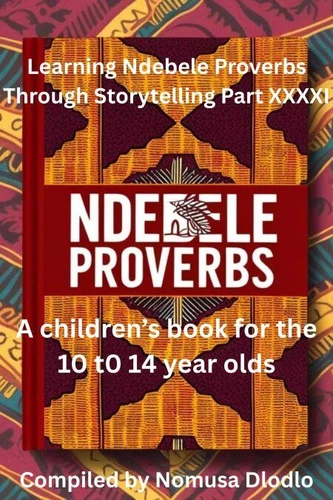
Learning Ndebele Proverbs Through Storytelling Part XLI
Par :Formats :
Disponible dans votre compte client Decitre ou Furet du Nord dès validation de votre commande. Le format ePub est :
- Compatible avec une lecture sur My Vivlio (smartphone, tablette, ordinateur)
- Compatible avec une lecture sur liseuses Vivlio
- Pour les liseuses autres que Vivlio, vous devez utiliser le logiciel Adobe Digital Edition. Non compatible avec la lecture sur les liseuses Kindle, Remarkable et Sony
 , qui est-ce ?
Notre partenaire de plateforme de lecture numérique où vous retrouverez l'ensemble de vos ebooks gratuitement
Pour en savoir plus sur nos ebooks, consultez notre aide en ligne ici
C'est si simple ! Lisez votre ebook avec l'app Vivlio sur votre tablette, mobile ou ordinateur :

- FormatePub
- ISBN8233501456
- EAN9798233501456
- Date de parution01/06/2026
- Protection num.pas de protection
- Infos supplémentairesepub
- ÉditeurLinda Balsamo
Résumé
Among the Ndebele people, wisdom has always travelled through stories. Around the hearth, in the fields, and within the rhythms of daily life, elders shaped character not through long lectures but through short, powerful sayings woven into narrative. Proverbs are therefore not decorative phrases; they are compressed histories of experience, carrying justice, identity, and moral direction in a few memorable words. This book, one of a series dedicated to Ndebele proverbs, presents twenty-five teachings explored through storytelling.
Each chapter brings a proverb to life through narrative, followed by a clear explanation, parallels in other languages, and reflections on the lessons it offers today. In doing so, the book restores these sayings to their natural environment-human experience-while making them accessible to modern readers. Across the collection, several enduring themes emerge. Strength is inseparable from its roots and leadership must honour the foundation that nurtured it.
Respect, or inhlonipho, stands as the true measure of dignity, reminding us that reputation is sustained not by noise or status but by character. The proverbs affirm that initiative and discipline are the engines of achievement, while laziness and careless talk ultimately undermine one's own progress. They defend quiet competence over empty display and insist that time is sacred and cannot be reclaimed once wasted. Family and community form the moral centre of these teachings.
Character begins at home, and example speaks louder than instruction. While individuals are accountable for their own choices, parents and elders are reminded that their conduct becomes the pattern the next generation follows. In this balance, the sayings create justice for both the young and the old, for the diligent and for the compassionate. Hope and resilience complete the wisdom offered here.
The proverbs acknowledge struggle and inherited burdens, yet they teach that perseverance gives birth to success. They encourage movement when opportunity appears, patience when effort feels heavy, and faith that honest work will bear fruit in time. To learn these proverbs is to inherit a worldview grounded in respect, responsibility, diligence, and hope. To learn them through storytelling is to experience their wisdom as living guidance rather than distant tradition.
May this book not only preserve Ndebele thought, but also inspire each reader to embody its enduring truths.
Each chapter brings a proverb to life through narrative, followed by a clear explanation, parallels in other languages, and reflections on the lessons it offers today. In doing so, the book restores these sayings to their natural environment-human experience-while making them accessible to modern readers. Across the collection, several enduring themes emerge. Strength is inseparable from its roots and leadership must honour the foundation that nurtured it.
Respect, or inhlonipho, stands as the true measure of dignity, reminding us that reputation is sustained not by noise or status but by character. The proverbs affirm that initiative and discipline are the engines of achievement, while laziness and careless talk ultimately undermine one's own progress. They defend quiet competence over empty display and insist that time is sacred and cannot be reclaimed once wasted. Family and community form the moral centre of these teachings.
Character begins at home, and example speaks louder than instruction. While individuals are accountable for their own choices, parents and elders are reminded that their conduct becomes the pattern the next generation follows. In this balance, the sayings create justice for both the young and the old, for the diligent and for the compassionate. Hope and resilience complete the wisdom offered here.
The proverbs acknowledge struggle and inherited burdens, yet they teach that perseverance gives birth to success. They encourage movement when opportunity appears, patience when effort feels heavy, and faith that honest work will bear fruit in time. To learn these proverbs is to inherit a worldview grounded in respect, responsibility, diligence, and hope. To learn them through storytelling is to experience their wisdom as living guidance rather than distant tradition.
May this book not only preserve Ndebele thought, but also inspire each reader to embody its enduring truths.