SOLDES
Jusqu'à -70% sur une sélection d'articles*

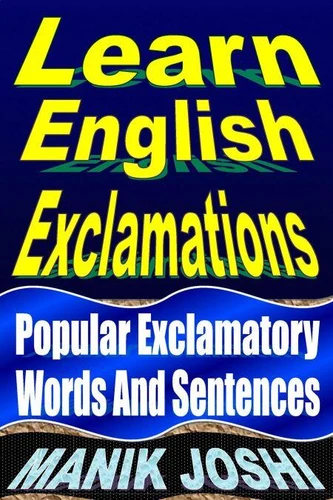
Learn English Exclamations: Popular Exclamatory Words and Sentences. English Daily Use, #5
Par :Formats :
Disponible dans votre compte client Decitre ou Furet du Nord dès validation de votre commande. Le format ePub est :
- Compatible avec une lecture sur My Vivlio (smartphone, tablette, ordinateur)
- Compatible avec une lecture sur liseuses Vivlio
- Pour les liseuses autres que Vivlio, vous devez utiliser le logiciel Adobe Digital Edition. Non compatible avec la lecture sur les liseuses Kindle, Remarkable et Sony
 , qui est-ce ?
Notre partenaire de plateforme de lecture numérique où vous retrouverez l'ensemble de vos ebooks gratuitement
Pour en savoir plus sur nos ebooks, consultez notre aide en ligne ici
C'est si simple ! Lisez votre ebook avec l'app Vivlio sur votre tablette, mobile ou ordinateur :

- FormatePub
- ISBN978-1-301-96298-3
- EAN9781301962983
- Date de parution19/06/2013
- Protection num.pas de protection
- Infos supplémentairesepub
- ÉditeurBluewater
Résumé
This Book Covers The Following Topics:1. What is an "Exclamation"?2. Exclamatory Sentences3. Exclamatory Sentences with 'What'4. Exclamatory Sentences with 'How'5. Exclamatory Sentences with So and Such6. Exclamations in Declarative Sentences7. Exclamations in Interrogative Sentences8. Exclamations in Imperative Sentences9. Detailed List of Interjections10. Using 'Common Words' as Exclamations11. Useful Exclamatory Phrases/Sentences12.
Other Patterns13. List of Emotions Shown by ExclamationsExercise: 1Exercise: 2Sample This:1. What is an "Exclamation"?DEFINITION: An exclamation (or interjection) is a short sound, word or phrase which is spoken suddenly to express strong emotion. OrExclamatory words that can stand alone as a sentence while expressing emotions or reactions are called exclamations (or interjections). An exclamation mark (!) should be written after an exclamation.
"Exclamation Mark" is called "Exclamation Point" in American English. There are many exclamatory words (interjections or exclamations) that are often used in daily life. Some of these words express one strong emotion while others express two or more strong emotions. They do not have a grammatical purpose in the sentence and are not associated with the other parts of the sentence. They do not play the role of a subject or a verb.
They can stand by themselves or are placed before, after or in the middle of a sentence to express a strong emotion or feeling. Examples:Exclamatory Word -- Alas!Represents feelings of 'Sadness, Sorry'Exclamatory Word -- Um!Represents feeling of 'Hesitation'Exclamatory Word -- Yum!Represents feeling of 'Pleasant Taste or Smell'You can use exclamations to show the following emotions:admiration, affection, anger, annoyance, anticipation, apathy, approval, attention, awe, confusion, delight, despair, disappointment, disapproval, discontent, dislike, distress, eagerness, elation, enjoyment, excitement, fear, frustration, grief, happiness, humor, hurt, irritation, joy, love, mourning, pain, panic, pleasure, pride, remorse, respect, shame, shock, sorrow, sorry, surprise, sympathy, terror, wonder, etc.
IMPORTANT NOTES:(1). Use Of An Exclamation (Interjection) In A Sentence(a). Beginning A Sentence With An InterjectionWhen you begin a sentence with an interjection you can place either a comma (, ) or an exclamatory mark (point) (!) after the interjection. Examples:Ah, what a wonderful gift!The comma (, ) after an interjection expresses less emotion. Ah! What a wonderful gift!Exclamatory mark (point) (!) after an interjection expresses more emotion.
Note: Both sentences have an exclamatory mark at the end. Obviously, both are exclamatory sentences. But the second one is more emphatic. Also note: if you put a comma after an interjection then the next word in the sentence will begin from the small letter but if you put an exclamatory mark after an interjection then the next word in the sentence will begin from a capital letter. Important Note: You can also end the sentence with a period (.) or question mark (?) to show mild emotion.
Ah, what a wonderful gift. Ah! What a wonderful gift. Wow, We won. Oh, did you go there?(B). Use Of An Interjection In The Middle Of A SentenceExamples:Hundreds of people, alas, feared killed in a massive landslide. Albert Einstein was born in...er.Germany. You deleted my folder.um.my file!(C). Use Of An Interjection At The End Of A SentenceExample:So got married, huh!
Other Patterns13. List of Emotions Shown by ExclamationsExercise: 1Exercise: 2Sample This:1. What is an "Exclamation"?DEFINITION: An exclamation (or interjection) is a short sound, word or phrase which is spoken suddenly to express strong emotion. OrExclamatory words that can stand alone as a sentence while expressing emotions or reactions are called exclamations (or interjections). An exclamation mark (!) should be written after an exclamation.
"Exclamation Mark" is called "Exclamation Point" in American English. There are many exclamatory words (interjections or exclamations) that are often used in daily life. Some of these words express one strong emotion while others express two or more strong emotions. They do not have a grammatical purpose in the sentence and are not associated with the other parts of the sentence. They do not play the role of a subject or a verb.
They can stand by themselves or are placed before, after or in the middle of a sentence to express a strong emotion or feeling. Examples:Exclamatory Word -- Alas!Represents feelings of 'Sadness, Sorry'Exclamatory Word -- Um!Represents feeling of 'Hesitation'Exclamatory Word -- Yum!Represents feeling of 'Pleasant Taste or Smell'You can use exclamations to show the following emotions:admiration, affection, anger, annoyance, anticipation, apathy, approval, attention, awe, confusion, delight, despair, disappointment, disapproval, discontent, dislike, distress, eagerness, elation, enjoyment, excitement, fear, frustration, grief, happiness, humor, hurt, irritation, joy, love, mourning, pain, panic, pleasure, pride, remorse, respect, shame, shock, sorrow, sorry, surprise, sympathy, terror, wonder, etc.
IMPORTANT NOTES:(1). Use Of An Exclamation (Interjection) In A Sentence(a). Beginning A Sentence With An InterjectionWhen you begin a sentence with an interjection you can place either a comma (, ) or an exclamatory mark (point) (!) after the interjection. Examples:Ah, what a wonderful gift!The comma (, ) after an interjection expresses less emotion. Ah! What a wonderful gift!Exclamatory mark (point) (!) after an interjection expresses more emotion.
Note: Both sentences have an exclamatory mark at the end. Obviously, both are exclamatory sentences. But the second one is more emphatic. Also note: if you put a comma after an interjection then the next word in the sentence will begin from the small letter but if you put an exclamatory mark after an interjection then the next word in the sentence will begin from a capital letter. Important Note: You can also end the sentence with a period (.) or question mark (?) to show mild emotion.
Ah, what a wonderful gift. Ah! What a wonderful gift. Wow, We won. Oh, did you go there?(B). Use Of An Interjection In The Middle Of A SentenceExamples:Hundreds of people, alas, feared killed in a massive landslide. Albert Einstein was born in...er.Germany. You deleted my folder.um.my file!(C). Use Of An Interjection At The End Of A SentenceExample:So got married, huh!