SOLDES
Jusqu'à -70% sur une sélection d'articles*

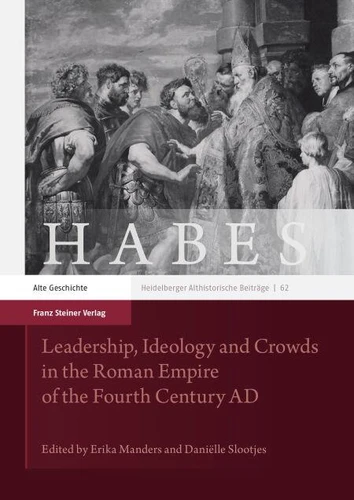
Leadership, Ideology and Crowds in the Roman Empire of the Fourth Century AD
Par : ,Formats :
Disponible dans votre compte client Decitre ou Furet du Nord dès validation de votre commande. Le format PDF est :
- Compatible avec une lecture sur My Vivlio (smartphone, tablette, ordinateur)
- Compatible avec une lecture sur liseuses Vivlio
- Pour les liseuses autres que Vivlio, vous devez utiliser le logiciel Adobe Digital Edition. Non compatible avec la lecture sur les liseuses Kindle, Remarkable et Sony
 , qui est-ce ?
Notre partenaire de plateforme de lecture numérique où vous retrouverez l'ensemble de vos ebooks gratuitement
Pour en savoir plus sur nos ebooks, consultez notre aide en ligne ici
C'est si simple ! Lisez votre ebook avec l'app Vivlio sur votre tablette, mobile ou ordinateur :

- Nombre de pages200
- FormatPDF
- ISBN978-3-515-12407-2
- EAN9783515124072
- Date de parution19/12/2019
- Protection num.Digital Watermarking
- Taille2 Mo
- Infos supplémentairespdf
- ÉditeurFranz Steiner
Résumé
This e-book focuses on the functioning of Roman leadership in the period of the Tetrarchs to Theodosius (284-395). Our volume starts from the idea that the imperial and ecclesiastical administrations became interdependent in this period and thus presents an integrated approach of imperial and religious leadership. As the spread of ideology plays a key role in creating societal consensus and thus in wielding power successfully, the volume analyses both types of leadership from an ideological angle.
It examines the communicative strategies employed by Roman emperors and bishops through analyzing the ideological messages that were disseminated by a variety of media: coins, architectural monuments, literary and legal texts. The central question of this volume is how, in a period in which an important shift took place in the power balance between church and state, emperors and bishops made use of ideology to bind people to them and thus to interact with their 'crowds', whether they be the inhabitants of the city of Rome or Constantinople, the subjects of the Empire at large or the members of the various religious communities.
It examines the communicative strategies employed by Roman emperors and bishops through analyzing the ideological messages that were disseminated by a variety of media: coins, architectural monuments, literary and legal texts. The central question of this volume is how, in a period in which an important shift took place in the power balance between church and state, emperors and bishops made use of ideology to bind people to them and thus to interact with their 'crowds', whether they be the inhabitants of the city of Rome or Constantinople, the subjects of the Empire at large or the members of the various religious communities.