SOLDES
Jusqu'à -70% sur une sélection d'articles*

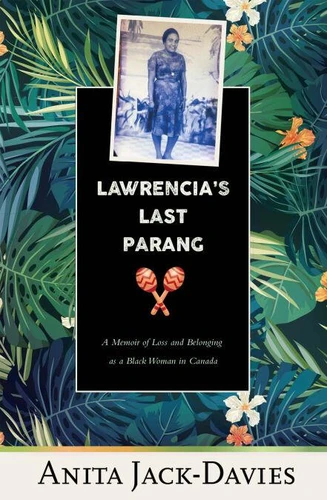
Lawrencia's Last Parang. A Memoir of Loss and Belonging as a Black Woman in Canada
Par :Formats :
Disponible dans votre compte client Decitre ou Furet du Nord dès validation de votre commande. Le format ePub est :
- Compatible avec une lecture sur My Vivlio (smartphone, tablette, ordinateur)
- Compatible avec une lecture sur liseuses Vivlio
- Pour les liseuses autres que Vivlio, vous devez utiliser le logiciel Adobe Digital Edition. Non compatible avec la lecture sur les liseuses Kindle, Remarkable et Sony
 , qui est-ce ?
Notre partenaire de plateforme de lecture numérique où vous retrouverez l'ensemble de vos ebooks gratuitement
Pour en savoir plus sur nos ebooks, consultez notre aide en ligne ici
C'est si simple ! Lisez votre ebook avec l'app Vivlio sur votre tablette, mobile ou ordinateur :

- Nombre de pages180
- FormatePub
- ISBN978-1-77133-810-3
- EAN9781771338103
- Date de parution30/06/2024
- Protection num.Digital Watermarking
- Taille1 Mo
- Infos supplémentairesepub
- ÉditeurInanna Memoir Series
Résumé
Lawrencia's Last Parang: A Memoir of Loss and Belonging as a Black Woman in Canada is a snapshot of the author's life after the passing of her grandmother Lawrencia, the woman who raised her. Written in the style of a patchwork quilt that takes the reader back and forth between past and present, she examines her grief from the perspective of a Canadian-born Black woman of Caribbean descent, and she begins to question her identity and what it means to be a Black Canadian in new ways.
This means exploring her childhood in Trinidad and her adult life in Kingston, Ontario, a predominantly white city; her experience of raising a mixed-raced child; and the meaning of her interracial marriage. Given love and protection by the grandmother who raised her, she belongs to Trinidad, but she was born in Canada. Thus, she occupies what she describes as a third space, needing both Trinidad and Canada, loving both, and belonging fully to neither.
In Canada, she struggles with issues of racism almost on a daily basis-everything from "where are you from?" to nurses who come to see the Black woman who gave birth to a white baby, to resentful students at the university where she teaches. Within the academy, she is again in a kind of third space as a "sometimes professor, " where archetypes of the Black body (mammy, jezebel, matriarch, and welfare mother) clash with the position of authority she holds in the classroom.
Simultaneously a memoir, a eulogy, and an academic analysis, the book offers an insightful exploration of race in Canada, one that complicates these issues through the lens of identity and loss, but also through a prism of privilege.
This means exploring her childhood in Trinidad and her adult life in Kingston, Ontario, a predominantly white city; her experience of raising a mixed-raced child; and the meaning of her interracial marriage. Given love and protection by the grandmother who raised her, she belongs to Trinidad, but she was born in Canada. Thus, she occupies what she describes as a third space, needing both Trinidad and Canada, loving both, and belonging fully to neither.
In Canada, she struggles with issues of racism almost on a daily basis-everything from "where are you from?" to nurses who come to see the Black woman who gave birth to a white baby, to resentful students at the university where she teaches. Within the academy, she is again in a kind of third space as a "sometimes professor, " where archetypes of the Black body (mammy, jezebel, matriarch, and welfare mother) clash with the position of authority she holds in the classroom.
Simultaneously a memoir, a eulogy, and an academic analysis, the book offers an insightful exploration of race in Canada, one that complicates these issues through the lens of identity and loss, but also through a prism of privilege.