SOLDES
Jusqu'à -70% sur une sélection d'articles*

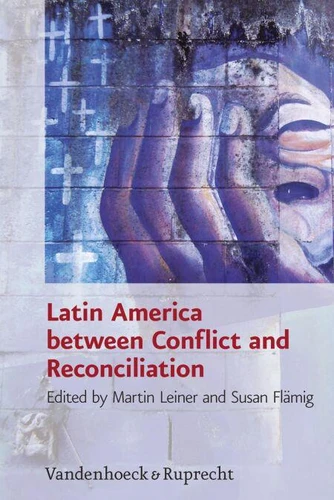
Latin America between Conflict and Reconciliation
Par : , , , ,Formats :
Disponible dans votre compte client Decitre ou Furet du Nord dès validation de votre commande. Le format PDF est :
- Compatible avec une lecture sur My Vivlio (smartphone, tablette, ordinateur)
- Compatible avec une lecture sur liseuses Vivlio
- Pour les liseuses autres que Vivlio, vous devez utiliser le logiciel Adobe Digital Edition. Non compatible avec la lecture sur les liseuses Kindle, Remarkable et Sony
 , qui est-ce ?
Notre partenaire de plateforme de lecture numérique où vous retrouverez l'ensemble de vos ebooks gratuitement
Pour en savoir plus sur nos ebooks, consultez notre aide en ligne ici
C'est si simple ! Lisez votre ebook avec l'app Vivlio sur votre tablette, mobile ou ordinateur :

- Nombre de pages272
- FormatPDF
- ISBN978-3-647-56011-3
- EAN9783647560113
- Date de parution18/07/2012
- Protection num.pas de protection
- Taille3 Mo
- Infos supplémentairespdf
- ÉditeurVandenhoeck & Ruprecht
Résumé
In the last decades, many countries in Latin America underwent a transition from dictatorship to democracy. Truth commissions were an essential instrument of uncovering politically motivated crimes and serious human rights violations. However, in many cases truth came without justice, perpetrators were not held accountable, and the reparations policy was rather restrictive. The authors of this volume address the issue from a transdisciplinary perspective.
On the one hand, they focus on a past that is shaped by fierce conflicts but also by attempts of fostering reconciliation in the middle of conflict. On the other hand, they address a reconciliation that still lies in the future and has to do with justice. Their first part offers a collection of case studies that approach the topics of reconciliation and conflict resolution during and in the aftermath of dictatorship and civil war from different perspectives and academic disciplines.
Their second part is dedicated to experiences with reconciliation, conflict resolution and migration from a global and comparative perspective. Several contributors reflect the Hölderlin perspective of "reconciliation in the middle of dispute". Other contributions aim to deepen our theoretical understanding of reconciliation by exploring the diversity of interpretations of the concept itself and elaborating the specific benefit of reconciliatory approaches for a sustainable peace.
Two authors offer an in-depth analysis of particular conflicts, and one article deals with the influence of religion and culture on the social role of Brazilian migrants in Japan.
On the one hand, they focus on a past that is shaped by fierce conflicts but also by attempts of fostering reconciliation in the middle of conflict. On the other hand, they address a reconciliation that still lies in the future and has to do with justice. Their first part offers a collection of case studies that approach the topics of reconciliation and conflict resolution during and in the aftermath of dictatorship and civil war from different perspectives and academic disciplines.
Their second part is dedicated to experiences with reconciliation, conflict resolution and migration from a global and comparative perspective. Several contributors reflect the Hölderlin perspective of "reconciliation in the middle of dispute". Other contributions aim to deepen our theoretical understanding of reconciliation by exploring the diversity of interpretations of the concept itself and elaborating the specific benefit of reconciliatory approaches for a sustainable peace.
Two authors offer an in-depth analysis of particular conflicts, and one article deals with the influence of religion and culture on the social role of Brazilian migrants in Japan.
A propos de Martin Leiner


110,00 €


45,00 €