SOLDES
Jusqu'à -70% sur une sélection d'articles*

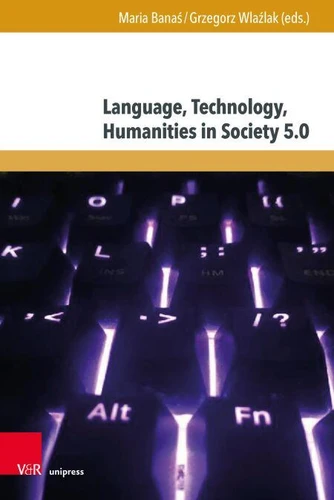
Language, Technology, Humanities in Society 5.0
Par : ,Formats :
Disponible dans votre compte client Decitre ou Furet du Nord dès validation de votre commande. Le format PDF est :
- Compatible avec une lecture sur My Vivlio (smartphone, tablette, ordinateur)
- Compatible avec une lecture sur liseuses Vivlio
- Pour les liseuses autres que Vivlio, vous devez utiliser le logiciel Adobe Digital Edition. Non compatible avec la lecture sur les liseuses Kindle, Remarkable et Sony
 , qui est-ce ?
Notre partenaire de plateforme de lecture numérique où vous retrouverez l'ensemble de vos ebooks gratuitement
Pour en savoir plus sur nos ebooks, consultez notre aide en ligne ici
C'est si simple ! Lisez votre ebook avec l'app Vivlio sur votre tablette, mobile ou ordinateur :

- Nombre de pages281
- FormatPDF
- ISBN978-3-8470-1763-9
- EAN9783847017639
- Date de parution18/11/2024
- Protection num.pas de protection
- Taille6 Mo
- Infos supplémentairespdf
- ÉditeurV&R Unipress
Résumé
The fusion of technologies blurring distinctions between the physical, digital, and biological worlds has become a significant hallmark of the fourth industrial revolution. One answer to shaping the future in the age of the digital revolution is the concept of Society 5.0.; a super-smart society aims to create an efficient reality, regardless of region, age, gender, language, or other factors. The contributors ask about the place for human beings (exclusion or inclusion) and the communication of natural languages in a reality dominated by big data, artificial intelligence, and robotics.
They intend to look at selected problems like humanities vs. technology, new perspectives in education and communication, digital and technological revolution. Thus, contributors' considerations capture philosophical reflection, sociological analysis, discourse and corpus analysis, translatology, business, academic, as well as educational insights into the future of traditional studies.
They intend to look at selected problems like humanities vs. technology, new perspectives in education and communication, digital and technological revolution. Thus, contributors' considerations capture philosophical reflection, sociological analysis, discourse and corpus analysis, translatology, business, academic, as well as educational insights into the future of traditional studies.