
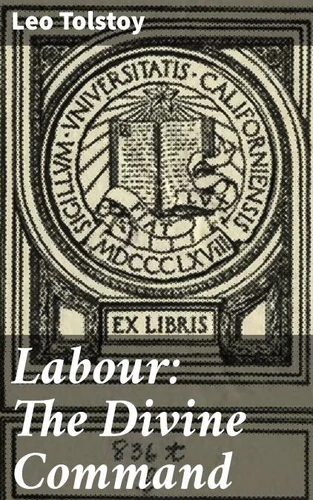
Labour: The Divine Command. Exploring the Spiritual Significance of Labor in 19th-Century Russia
Par :Formats :
Disponible dans votre compte client Decitre ou Furet du Nord dès validation de votre commande. Le format ePub est :
- Compatible avec une lecture sur My Vivlio (smartphone, tablette, ordinateur)
- Compatible avec une lecture sur liseuses Vivlio
- Pour les liseuses autres que Vivlio, vous devez utiliser le logiciel Adobe Digital Edition. Non compatible avec la lecture sur les liseuses Kindle, Remarkable et Sony
 , qui est-ce ?
Notre partenaire de plateforme de lecture numérique où vous retrouverez l'ensemble de vos ebooks gratuitement
Pour en savoir plus sur nos ebooks, consultez notre aide en ligne ici
C'est si simple ! Lisez votre ebook avec l'app Vivlio sur votre tablette, mobile ou ordinateur :

- Nombre de pages57
- FormatePub
- ISBN406-4-06-645912-3
- EAN4064066459123
- Date de parution11/04/2021
- Protection num.Digital Watermarking
- Taille628 Ko
- Infos supplémentairesepub
- ÉditeurGOOD PRESS
Résumé
In "Labour: The Divine Command, " Leo Tolstoy articulates a profound philosophical exploration of labor and its spiritual dimensions. The work reflects Tolstoy's literary style, characterized by clarity and moral earnestness, as he delves into the ethical implications of work in human life. Drawing upon elements of existentialism and moral philosophy, Tolstoy critiques contemporary notions of labor that prioritize material success over spiritual fulfillment, thus situating his ideas within the broader context of 19th-century Russian thought and its socio-political upheavals.
Tolstoy, a prominent figure in literature and philosophy, lived through a period of significant personal and societal transformation. His own experiences with wealth, disillusionment, and the quest for meaning led him to reevaluate the role of labor in human existence. His writings often reflect a deep concern for social justice and the moral responsibilities of individuals towards one another and the greater community, notions that are vividly present in this text.
"Labour: The Divine Command" is essential reading for anyone interested in the intersections of work, morality, and spirituality. Tolstoy's insights provide timeless wisdom for the modern reader, challenging us to rethink how we engage with labor not merely as a means to an end, but as a vital part of our human experience.
Tolstoy, a prominent figure in literature and philosophy, lived through a period of significant personal and societal transformation. His own experiences with wealth, disillusionment, and the quest for meaning led him to reevaluate the role of labor in human existence. His writings often reflect a deep concern for social justice and the moral responsibilities of individuals towards one another and the greater community, notions that are vividly present in this text.
"Labour: The Divine Command" is essential reading for anyone interested in the intersections of work, morality, and spirituality. Tolstoy's insights provide timeless wisdom for the modern reader, challenging us to rethink how we engage with labor not merely as a means to an end, but as a vital part of our human experience.
A propos de Leo Tolstoy

Childhood
E-book
2,99 €

0,99 €
1,99 €

War and Peace
E-book
0,99 €

What Is Art?
E-book
0,49 €

Resurrection
E-book
0,49 €

Hadji Murat
E-book
0,49 €

Youth
E-book
0,49 €

The Kreutzer Sonata
E-book
0,49 €

Boyhood
E-book
0,49 €

Family Happiness
E-book
0,49 €
Anna Karenina
E-book
0,49 €