In the British military, some soldiers carry rifles. Others carry microscopes. But on the frontline, both are matters of life and death. On the night of 11 March 1987, a young recruit boarded a sleeper train from Aberdeen, bound for the gruelling training grounds of Keogh Barracks. What followed was a remarkable sixteen-year military career that spanned the end of the Cold War to the global conflicts of the early 21st century.
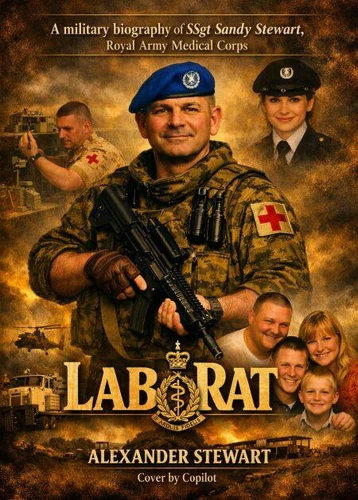
As a Biomedical Scientist in the Royal Army Medical Corps (RAMC), his battlefield was not just the trenches, but the clinical laboratories, operating theatres, and field hospitals where precision under pressure meant the difference between survival and tragedy. Lab Rat is the highly personal, humorous, and gritty memoir of a soldier who lived a double life as a clinician and an infantryman. From the isolated winds of the Falklands where he served as the island's sole biomedical scientist managing human, veterinary, and environmental health samples to the high-tension frontlines of Bosnia under daily mortar fire, his journey is filled with extraordinary near-misses.
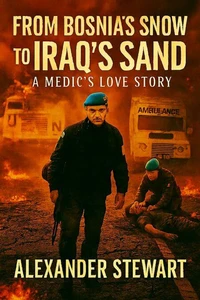
It was in a damaged Bosnian tanning factory that a shattering anti-aircraft missile blast earned him the nickname 'Captain Scarlet' the soldier who seemed completely indestructible. When the war in Iraq erupted, he deployed on both Operations Telic 1 and 6, navigating the chaotic logistics of setting up a field hospital in a canvas tent city amidst 50°C+ desert heat. Facing sand-clogged equipment, mass casualties, and a critical failure of the blood refrigeration systems, he was forced to rely on sheer grit, clinical expertise, and high-speed supply runs.
He pioneered emergency donor protocols that kept mortally wounded casualties alive, proving that the quiet work of the laboratory was the ultimate lifeline for troops in combat. Told with honest northern grit, sharp military wit, and deep compassion, Lab Rat captures the unique reality of serving your country, the heavy toll of leaving a family behind, and the vital role of the medical teams who ensure that on the worst days of a soldier's life, they make it back home.
In the British military, some soldiers carry rifles. Others carry microscopes. But on the frontline, both are matters of life and death. On the night of 11 March 1987, a young recruit boarded a sleeper train from Aberdeen, bound for the gruelling training grounds of Keogh Barracks. What followed was a remarkable sixteen-year military career that spanned the end of the Cold War to the global conflicts of the early 21st century.
As a Biomedical Scientist in the Royal Army Medical Corps (RAMC), his battlefield was not just the trenches, but the clinical laboratories, operating theatres, and field hospitals where precision under pressure meant the difference between survival and tragedy. Lab Rat is the highly personal, humorous, and gritty memoir of a soldier who lived a double life as a clinician and an infantryman. From the isolated winds of the Falklands where he served as the island's sole biomedical scientist managing human, veterinary, and environmental health samples to the high-tension frontlines of Bosnia under daily mortar fire, his journey is filled with extraordinary near-misses.
It was in a damaged Bosnian tanning factory that a shattering anti-aircraft missile blast earned him the nickname 'Captain Scarlet' the soldier who seemed completely indestructible. When the war in Iraq erupted, he deployed on both Operations Telic 1 and 6, navigating the chaotic logistics of setting up a field hospital in a canvas tent city amidst 50°C+ desert heat. Facing sand-clogged equipment, mass casualties, and a critical failure of the blood refrigeration systems, he was forced to rely on sheer grit, clinical expertise, and high-speed supply runs.
He pioneered emergency donor protocols that kept mortally wounded casualties alive, proving that the quiet work of the laboratory was the ultimate lifeline for troops in combat. Told with honest northern grit, sharp military wit, and deep compassion, Lab Rat captures the unique reality of serving your country, the heavy toll of leaving a family behind, and the vital role of the medical teams who ensure that on the worst days of a soldier's life, they make it back home.