SOLDES
Jusqu'à -70% sur une sélection d'articles*

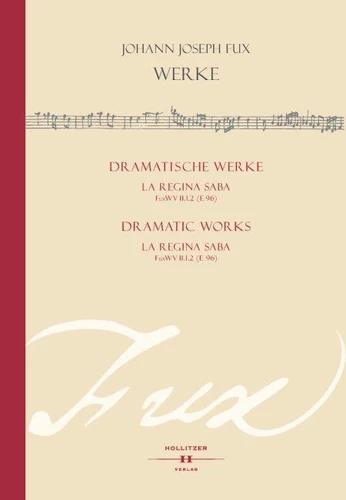
La Regina Saba (E 96). Johann Joseph Fux - Werke B/II/1
Par :Formats :
Disponible dans votre compte client Decitre ou Furet du Nord dès validation de votre commande. Le format PDF est :
- Compatible avec une lecture sur My Vivlio (smartphone, tablette, ordinateur)
- Compatible avec une lecture sur liseuses Vivlio
- Pour les liseuses autres que Vivlio, vous devez utiliser le logiciel Adobe Digital Edition. Non compatible avec la lecture sur les liseuses Kindle, Remarkable et Sony
 , qui est-ce ?
Notre partenaire de plateforme de lecture numérique où vous retrouverez l'ensemble de vos ebooks gratuitement
Pour en savoir plus sur nos ebooks, consultez notre aide en ligne ici
C'est si simple ! Lisez votre ebook avec l'app Vivlio sur votre tablette, mobile ou ordinateur :

- Nombre de pages192
- FormatPDF
- ISBN978-3-99094-150-8
- EAN9783990941508
- Date de parution12/12/2025
- Protection num.Digital Watermarking
- Taille12 Mo
- Infos supplémentairespdf
- ÉditeurHollitzer Wissenschaftsverlag
Résumé
Kurz vor dem Tod Kaiser Leopolds I. in der Fastenzeit 1705 wurde das Oratorium La Regina Saba am Wiener Hof aufgeführt. Francesco Maria Ruggieri konstruierte eine Handlung mit fünf Figuren rund um das seltene Thema der einzigen weiblichen Figur in den Büchern der Könige, die eine Krone trug, und ihrer Begegnung mit Salomon, die für die Errichtung des Tempels von Jerusalem entscheidend war. La Regina Saba ist tatsächlich das einzige Oratorium in italienischer Sprache, das sich um diese Figur dreht und der Wiener Tradition folgt, die Tugenden der Könige Israels, Allegorien der Habsburger, in den Mittelpunkt zu stellen.
Das zweite Oratorium von Johann Joseph Fux (ca.
1660-1741) erkundet das Genre mit innovativen musikalischen Entscheidungen, wie beispielsweise einer Instrumentierung, die bis auf die Fagotte ausschließlich aus Streichern besteht. Damit sollte die poetische Aussage im Zentrum bleiben. Durch eine stärkere Einhaltung der dem Libretto immanenten Prosodie und eine große Vielfalt an Tonarten komponierte Fux eine regelrechte Predigt in Musik. Die Partitur galt lange als unwiederbringlich verloren, wurde jedoch wiederentdeckt und zum ersten Mal in der Neuzeit 2024 in Wien an der Österreichischen Akademie der Wissenschaften aufgeführt. Shortly before the death of Emperor Leopold I in Lent 1705, the oratorio La Regina Saba was performed at the court of Vienna.
Francesco Maria Ruggieri constructed a plot involving five characters around the rare theme of the only female figure in the Books of Kings to wear a crown, and of her meeting with Solomon, which was decisive for the erection of the Temple of Jerusalem. La Regina Saba is in fact the only oratorio in Italian centred on this character, following the Viennese tradition of focusing on the virtues of the Kings of Israel, allegories of the Habsburgs. The second oratorio by Johann Joseph Fux (c.
1660-1741) explores the genre with innovative musical choices, such as instrumentation consisting entirely of strings (except for the bassoons). This was designed to keep the poetic meaning at the centre. Through greater adherence to the intrinsic prosody of the libretto and a wide tonal variety, Fux composed a veritable sermon in music. For a long time, the score was thought to be irretrievably lost, but it was rediscovered and performed for the first time in modern times in 2024 in Vienna at the Austrian Academy of Sciences.
1660-1741) erkundet das Genre mit innovativen musikalischen Entscheidungen, wie beispielsweise einer Instrumentierung, die bis auf die Fagotte ausschließlich aus Streichern besteht. Damit sollte die poetische Aussage im Zentrum bleiben. Durch eine stärkere Einhaltung der dem Libretto immanenten Prosodie und eine große Vielfalt an Tonarten komponierte Fux eine regelrechte Predigt in Musik. Die Partitur galt lange als unwiederbringlich verloren, wurde jedoch wiederentdeckt und zum ersten Mal in der Neuzeit 2024 in Wien an der Österreichischen Akademie der Wissenschaften aufgeführt. Shortly before the death of Emperor Leopold I in Lent 1705, the oratorio La Regina Saba was performed at the court of Vienna.
Francesco Maria Ruggieri constructed a plot involving five characters around the rare theme of the only female figure in the Books of Kings to wear a crown, and of her meeting with Solomon, which was decisive for the erection of the Temple of Jerusalem. La Regina Saba is in fact the only oratorio in Italian centred on this character, following the Viennese tradition of focusing on the virtues of the Kings of Israel, allegories of the Habsburgs. The second oratorio by Johann Joseph Fux (c.
1660-1741) explores the genre with innovative musical choices, such as instrumentation consisting entirely of strings (except for the bassoons). This was designed to keep the poetic meaning at the centre. Through greater adherence to the intrinsic prosody of the libretto and a wide tonal variety, Fux composed a veritable sermon in music. For a long time, the score was thought to be irretrievably lost, but it was rediscovered and performed for the first time in modern times in 2024 in Vienna at the Austrian Academy of Sciences.