SOLDES
Jusqu'à -70% sur une sélection d'articles*

Krieg und Fotografie. Neue Aspekte einer alten Beziehung in transnationaler und postkolonialer Perspektive
Par : , , ,Formats :
Disponible dans votre compte client Decitre ou Furet du Nord dès validation de votre commande. Le format PDF est :
- Compatible avec une lecture sur My Vivlio (smartphone, tablette, ordinateur)
- Compatible avec une lecture sur liseuses Vivlio
- Pour les liseuses autres que Vivlio, vous devez utiliser le logiciel Adobe Digital Edition. Non compatible avec la lecture sur les liseuses Kindle, Remarkable et Sony
 , qui est-ce ?
Notre partenaire de plateforme de lecture numérique où vous retrouverez l'ensemble de vos ebooks gratuitement
Pour en savoir plus sur nos ebooks, consultez notre aide en ligne ici
C'est si simple ! Lisez votre ebook avec l'app Vivlio sur votre tablette, mobile ou ordinateur :

- Nombre de pages148
- FormatPDF
- ISBN978-3-8470-0849-1
- EAN9783847008491
- Date de parution16/07/2018
- Protection num.pas de protection
- Taille6 Mo
- Infos supplémentairespdf
- ÉditeurV&R Unipress
Résumé
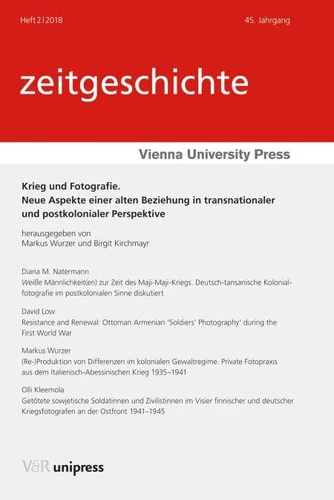
Die Verbindungslinien zwischen Fotografie und Krieg sind vielfältig. Bereits seit rund drei Jahrzehnten sind diese Gegenstand historischen Erkenntnisinteresses. In den letzten Jahren haben kultur- und medienwissenschaftlich informierte Ansätze fotogeschichtliche Grundlagen erweitert und neue Fragestellungen eröffnet. Lange Zeit war vor allem Fotografie aus den Weltkriegen forschungsrelevant, nun rücken auch fotografische Praktiken im Kontext anderer Konflikte in den Fokus.
Dieses Heft schließt an diese innovativen Forschungstendenzen an und versammelt vier Beiträge, die sich unterschiedlicher Ansätze bedienend mit Fotografien aus Kriegen der ersten Hälfte des 20. Jahrhunderts beschäftigen, die geografisch außerhalb oder an den Rändern Europas stattfanden. Welche Vorstellungen (re-)produzierten Fotografien im Kommunikationszusammenhang des Krieges von der Welt, vom Eigenen und Fremden sowie von Machtbeziehungen? Wie wurden sie dazu von AkteurInnen angeeignet, verwendet, missbraucht und wie wurden dabei bestehende Deutungen affirmiert, modifiziert oder gebrochen? There are various connection lines between photography and war.
Since more than three decades, these connection lines have been the subject of historical interest. In recent years, culture and media-scientific informed approaches have enlarged the principles of photography and history and raised new issues. Photography of world wars were pertaining to research for a long time. However, even photographical methods in the context of other conflicts are being focussed.
This issue follows up on these innovative research tendencies and includes four essays with different scientific approaches which deal with wars of the first half of the 20th century which took place outside or at the borders of Europe. What kind of concepts did the photography (re-) produce in the war communication context of the world, of the familiar and the foreign as well as the power relationships? How did the photographers acquire, use, misuse these concepts and how did they affirm, modify and violate existing interpretations?
Dieses Heft schließt an diese innovativen Forschungstendenzen an und versammelt vier Beiträge, die sich unterschiedlicher Ansätze bedienend mit Fotografien aus Kriegen der ersten Hälfte des 20. Jahrhunderts beschäftigen, die geografisch außerhalb oder an den Rändern Europas stattfanden. Welche Vorstellungen (re-)produzierten Fotografien im Kommunikationszusammenhang des Krieges von der Welt, vom Eigenen und Fremden sowie von Machtbeziehungen? Wie wurden sie dazu von AkteurInnen angeeignet, verwendet, missbraucht und wie wurden dabei bestehende Deutungen affirmiert, modifiziert oder gebrochen? There are various connection lines between photography and war.
Since more than three decades, these connection lines have been the subject of historical interest. In recent years, culture and media-scientific informed approaches have enlarged the principles of photography and history and raised new issues. Photography of world wars were pertaining to research for a long time. However, even photographical methods in the context of other conflicts are being focussed.
This issue follows up on these innovative research tendencies and includes four essays with different scientific approaches which deal with wars of the first half of the 20th century which took place outside or at the borders of Europe. What kind of concepts did the photography (re-) produce in the war communication context of the world, of the familiar and the foreign as well as the power relationships? How did the photographers acquire, use, misuse these concepts and how did they affirm, modify and violate existing interpretations?