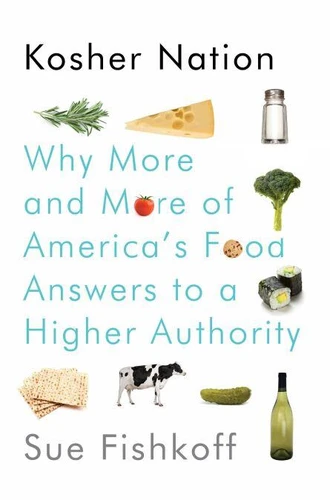
Kosher Nation. Why More and More of America's Food Answers to a Higher Authority
Par :Formats :
Disponible dans votre compte client Decitre ou Furet du Nord dès validation de votre commande. Le format ePub protégé est :
- Compatible avec une lecture sur My Vivlio (smartphone, tablette, ordinateur)
- Compatible avec une lecture sur liseuses Vivlio
- Pour les liseuses autres que Vivlio, vous devez utiliser le logiciel Adobe Digital Edition. Non compatible avec la lecture sur les liseuses Kindle, Remarkable et Sony
- Non compatible avec un achat hors France métropolitaine
 , qui est-ce ?
Notre partenaire de plateforme de lecture numérique où vous retrouverez l'ensemble de vos ebooks gratuitement
Pour en savoir plus sur nos ebooks, consultez notre aide en ligne ici
C'est si simple ! Lisez votre ebook avec l'app Vivlio sur votre tablette, mobile ou ordinateur :

- Nombre de pages416
- FormatePub
- ISBN978-0-8052-4288-1
- EAN9780805242881
- Date de parution12/10/2010
- Protection num.Adobe DRM
- Taille2 Mo
- Infos supplémentairesepub
- ÉditeurSchocken
Résumé
Kosher? That means the rabbi blessed it, right? Not exactly. In this captivating account of a Bible-based practice that has grown into a multibillions-dollar industry, journalist Sue Fishkoff travels throughout America and to Shanghai, China, to find out who eats kosher food, who produces it, who is responsible for its certification, and how this fascinating world continues to evolve. She explains why 86 percent of the 11.2 million Americans who regularly buy kosher food are not observant Jews-they are Muslims, Seventh-day Adventists, vegetarians, people with food allergies, and consumers who pay top dollar for food they believe "answers to a higher authority." Fishkoff interviews food manufacturers, rabbinic supervisors, and ritual slaughterers; meets with eco-kosher adherents who go beyond traditional requirements to produce organic chicken and pasture-raised beef; sips boutique kosher wine in Napa Valley; talks to shoppers at an upscale kosher supermarket in Brooklyn; and marches with unemployed workers at the nation's largest kosher meatpacking plant.
She talks to Reform Jews who are rediscovering the spiritual benefits of kashrut, and to Conservative and Orthodox Jews who are demanding that kosher food production adhere to ethical and environmental values. And she chronicles the corruption, price-fixing, and strong arm tactics of early-twentieth-century kosher meat production, against which contemporary kashrut standards pale by comparison. A revelatory look at the current state of kosher in America, this book will appeal to anyone interested in food, religion, Jewish identity, or big business.
She talks to Reform Jews who are rediscovering the spiritual benefits of kashrut, and to Conservative and Orthodox Jews who are demanding that kosher food production adhere to ethical and environmental values. And she chronicles the corruption, price-fixing, and strong arm tactics of early-twentieth-century kosher meat production, against which contemporary kashrut standards pale by comparison. A revelatory look at the current state of kosher in America, this book will appeal to anyone interested in food, religion, Jewish identity, or big business.