OFFRE LISEUSES
Une liseuse achetée = une housse offerte* jusqu'au 21 juin

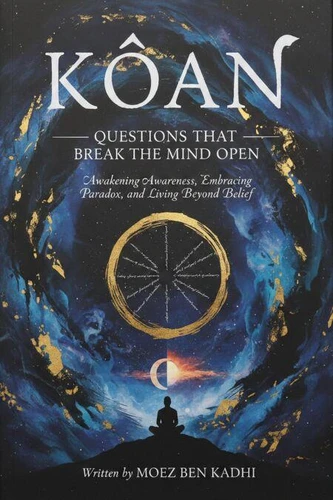
Kōan – Questions That Break the Mind Open
Par :Formats :
Actuellement indisponible
Cet article est actuellement indisponible, il ne peut pas être commandé sur notre site pour le moment. Nous vous invitons à vous inscrire à l'alerte disponibilité, vous recevrez un e-mail dès que cet ouvrage sera à nouveau disponible.
Disponible dans votre compte client Decitre ou Furet du Nord dès validation de votre commande. Le format ePub est :
- Compatible avec une lecture sur My Vivlio (smartphone, tablette, ordinateur)
- Compatible avec une lecture sur liseuses Vivlio
- Pour les liseuses autres que Vivlio, vous devez utiliser le logiciel Adobe Digital Edition. Non compatible avec la lecture sur les liseuses Kindle, Remarkable et Sony
 , qui est-ce ?
Notre partenaire de plateforme de lecture numérique où vous retrouverez l'ensemble de vos ebooks gratuitement
Pour en savoir plus sur nos ebooks, consultez notre aide en ligne ici
C'est si simple ! Lisez votre ebook avec l'app Vivlio sur votre tablette, mobile ou ordinateur :

- FormatePub
- ISBN8233882913
- EAN9798233882913
- Date de parution24/02/2026
- Protection num.pas de protection
- Infos supplémentairesepub
- ÉditeurLinda Balsamo
Résumé
There is a question that cannot be answered. Not because it is difficult, and not because it is hidden, but because the one who tries to answer it begins to dissolve in the asking. This book begins there before explanation, before philosophy, before belief. Before the sound, there is silence. Before the word, there is listening. Before the self, there is awareness. You are invited into that space.
A koan is not a riddle, and it is not a puzzle designed for cleverness. It cannot be solved by intelligence or conquered by study. In the Zen tradition, masters used koan to interrupt the machinery of the mind, to create a fracture in habitual thinking so complete that the identity constructed from thought could no longer stand uninterrupted. When logic fails, something deeper awakens. A koan does not give you an answer.
It removes the one who demands one. The mind searches for resolution. It calculates, compares, interprets, and constructs meaning. It builds narratives to feel secure. It prefers conclusions because conclusions feel stable. Inquiry destabilizes the known, and the known is where the mind feels safe. Yet without destabilization, there is no awakening. The koan does not destroy certainty with force. It introduces a subtle crack.
Through that crack, light enters. From childhood, you were taught to answer questions. What is your name? What do you want to be? What is right? What is wrong? Who are you? Each answer became part of a structure. Over time, that structure formed what you call yourself. The problem is not that identity exists. The problem is that it is rarely examined. Certainty becomes a habit. Habit becomes identity.
Identity becomes a boundary. And the boundary becomes a prison you do not realize you are defending.
A koan is not a riddle, and it is not a puzzle designed for cleverness. It cannot be solved by intelligence or conquered by study. In the Zen tradition, masters used koan to interrupt the machinery of the mind, to create a fracture in habitual thinking so complete that the identity constructed from thought could no longer stand uninterrupted. When logic fails, something deeper awakens. A koan does not give you an answer.
It removes the one who demands one. The mind searches for resolution. It calculates, compares, interprets, and constructs meaning. It builds narratives to feel secure. It prefers conclusions because conclusions feel stable. Inquiry destabilizes the known, and the known is where the mind feels safe. Yet without destabilization, there is no awakening. The koan does not destroy certainty with force. It introduces a subtle crack.
Through that crack, light enters. From childhood, you were taught to answer questions. What is your name? What do you want to be? What is right? What is wrong? Who are you? Each answer became part of a structure. Over time, that structure formed what you call yourself. The problem is not that identity exists. The problem is that it is rarely examined. Certainty becomes a habit. Habit becomes identity.
Identity becomes a boundary. And the boundary becomes a prison you do not realize you are defending.