OFFRE LISEUSES
Une liseuse achetée = une housse offerte* jusqu'au 21 juin

Nouveauté
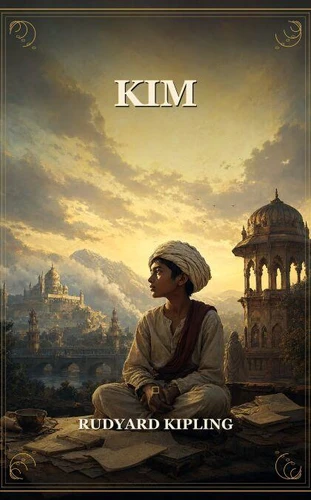
Kim
Par :Formats :
Disponible dans votre compte client Decitre ou Furet du Nord dès validation de votre commande. Le format ePub est :
- Compatible avec une lecture sur My Vivlio (smartphone, tablette, ordinateur)
- Compatible avec une lecture sur liseuses Vivlio
- Pour les liseuses autres que Vivlio, vous devez utiliser le logiciel Adobe Digital Edition. Non compatible avec la lecture sur les liseuses Kindle, Remarkable et Sony
 , qui est-ce ?
Notre partenaire de plateforme de lecture numérique où vous retrouverez l'ensemble de vos ebooks gratuitement
Pour en savoir plus sur nos ebooks, consultez notre aide en ligne ici
C'est si simple ! Lisez votre ebook avec l'app Vivlio sur votre tablette, mobile ou ordinateur :

- Nombre de pages359
- FormatePub
- ISBN978-0-7875-4181-1
- EAN9780787541811
- Date de parution19/05/2026
- Protection num.Digital Watermarking
- Taille2 Mo
- Infos supplémentairesepub
- ÉditeurCaelwick Press
Résumé
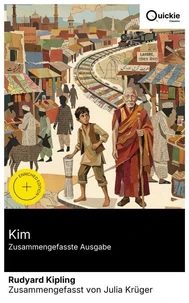
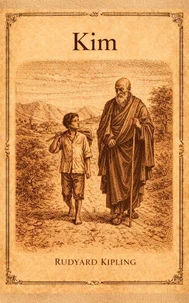
We rely on your support to help us keep producing beautiful, free, and unrestricted editions of literature for the digital age. Will you support our efforts with a donation ? Rudyard Kipling's novel Kim , published in 1901, tells the story of Kimball O'Hara ("Kim"), the orphaned son of an Anglo-Irish soldier, who grows up as a street-urchin on the streets of Lahore in India during the time of the British Raj.
Knowing little of his parentage, he is as much a native as his companions, speaking Hindi and Urdu rather than English, cunning and street-wise. At about the age of twelve, Kim encounters an old Tibetan lama on a pilgrimage in search of a holy river. He decides to fall in with the lama on his travels, and becomes in essence the old man's disciple. Not long after, Kim is captured at an encampment of British soldiers under suspicion of being a thief.
His parentage is discovered and the officers decide he must be raised as a "Sahib" (an Englishman) and sent off to school. The interest of the British officers in Kim is not entirely disinterested, however, as they see his potential for acting as a courier and spy as part of their "Great Game" of espionage against their bitter rivals the Russians, and ensure that he is trained accordingly. Kim is a well-loved book, often being listed as one of the best English-language novels.
Its depiction of the India of the time, its varied races, religions, customs and scenery is detailed, rich and sympathetic. And the manoeuverings of the players in the Great Game make for an entertaining adventure story.
Knowing little of his parentage, he is as much a native as his companions, speaking Hindi and Urdu rather than English, cunning and street-wise. At about the age of twelve, Kim encounters an old Tibetan lama on a pilgrimage in search of a holy river. He decides to fall in with the lama on his travels, and becomes in essence the old man's disciple. Not long after, Kim is captured at an encampment of British soldiers under suspicion of being a thief.
His parentage is discovered and the officers decide he must be raised as a "Sahib" (an Englishman) and sent off to school. The interest of the British officers in Kim is not entirely disinterested, however, as they see his potential for acting as a courier and spy as part of their "Great Game" of espionage against their bitter rivals the Russians, and ensure that he is trained accordingly. Kim is a well-loved book, often being listed as one of the best English-language novels.
Its depiction of the India of the time, its varied races, religions, customs and scenery is detailed, rich and sympathetic. And the manoeuverings of the players in the Great Game make for an entertaining adventure story.
A propos de Rudyard Kipling

0,99 €
The Adventure Collection
E-book
0,99 €

Das Dschungelbuch. Mogli
E-book
2,99 €
Just So Stories
E-book
0,49 €
The Jungle Book
E-book
0,49 €
Kim
E-book
0,49 €
Capitaines courageux
E-book
2,99 €