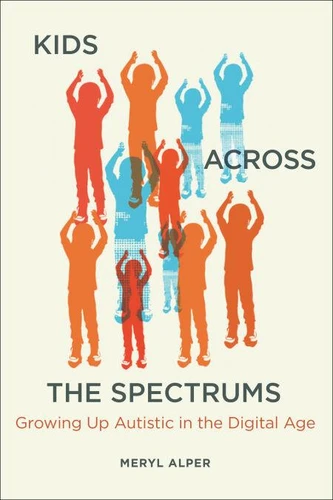
Kids Across the Spectrums. Growing Up Autistic in the Digital Age
Par :Formats :
Disponible dans votre compte client Decitre ou Furet du Nord dès validation de votre commande. Le format ePub protégé est :
- Compatible avec une lecture sur My Vivlio (smartphone, tablette, ordinateur)
- Compatible avec une lecture sur liseuses Vivlio
- Pour les liseuses autres que Vivlio, vous devez utiliser le logiciel Adobe Digital Edition. Non compatible avec la lecture sur les liseuses Kindle, Remarkable et Sony
- Non compatible avec un achat hors France métropolitaine
 , qui est-ce ?
Notre partenaire de plateforme de lecture numérique où vous retrouverez l'ensemble de vos ebooks gratuitement
Pour en savoir plus sur nos ebooks, consultez notre aide en ligne ici
C'est si simple ! Lisez votre ebook avec l'app Vivlio sur votre tablette, mobile ou ordinateur :

- Nombre de pages324
- FormatePub
- ISBN978-0-262-37399-9
- EAN9780262373999
- Date de parution15/08/2023
- Protection num.Adobe DRM
- Taille8 Mo
- Infos supplémentairesepub
- ÉditeurThe MIT Press
Résumé
An ethnographic study of diverse children on the autism spectrum and the role of media and technology in their everyday lives. In spite of widespread assumptions that young people on the autism spectrum have a "natural" attraction to technology-a premise that leads to significant speculation about how media helps or harms them-relatively little research actually exists about their everyday tech use.
In Kids Across the Spectrums, Meryl Alper fills this gap with the first book-length ethnography of the digital lives of autistic young people. Based on research with more than sixty neurodivergent children from an array of racial, ethnic, and socioeconomic backgrounds, Kids Across the Spectrums delves into three overlapping areas of their media usage: cultural belonging, social relationships, and physical embodiment. Alper's work demonstrates that what autistic youth do with technology is not radically different from their non-autistic peers.
However, significant social and health inequalities-including limited recreational programs, unsafe neighborhoods, and challenges obtaining appropriate therapeutic services-spill over into their media habits. With an emphasis on what autistic children bring to media as opposed to what they supposedly lack socially, Alper argues that their relationships do not exist outside of how communication technologies affect sociality, nor beyond the boundaries of stigmatization and society writ large.
Finally, she offers practical suggestions for the education, healthcare, and technology sectors to promote equity, inclusion, access, and justice for autistic kids at home, at school, and in their communities.
In Kids Across the Spectrums, Meryl Alper fills this gap with the first book-length ethnography of the digital lives of autistic young people. Based on research with more than sixty neurodivergent children from an array of racial, ethnic, and socioeconomic backgrounds, Kids Across the Spectrums delves into three overlapping areas of their media usage: cultural belonging, social relationships, and physical embodiment. Alper's work demonstrates that what autistic youth do with technology is not radically different from their non-autistic peers.
However, significant social and health inequalities-including limited recreational programs, unsafe neighborhoods, and challenges obtaining appropriate therapeutic services-spill over into their media habits. With an emphasis on what autistic children bring to media as opposed to what they supposedly lack socially, Alper argues that their relationships do not exist outside of how communication technologies affect sociality, nor beyond the boundaries of stigmatization and society writ large.
Finally, she offers practical suggestions for the education, healthcare, and technology sectors to promote equity, inclusion, access, and justice for autistic kids at home, at school, and in their communities.